Podcast: Building Noble Hearts

  • I Get to Bring Them In

    Building Noble Hearts
    Building Noble Hearts
    I Get to Bring Them In
    Loading
    /

    What is community? How do you find it? Join it? Build it? It’s more than just showing up to a bake sale with brownies from a box, then taking off (though I’ve done this many times). Is it bowling clubs with awesome matching shirts? What about hot but festive street fairs where you spend too much and never have a real conversation? How do you build community?

    You’re listening to BNH. I’m Margaret Watts Romney. Today we examine one community and the many gears that had to click to bring it about. Throughout this season, we’re speaking with people whose lives have intersected the work of humanitarian violinist Shinichi Suzuki, and we’re finding themes of good teaching everywhere; themes like accountability, trust, and inclusion.

    To answer my questions about community I had a conversation with someone who has built a remarkably strong and unified music group. Clara Hardie started with relationships that were very dear to her, but among a population that hadn’t had access to Suzuki teaching before: the families that were regulars of The Capuchin Soup kitchen in Detroit. 

    Clara Hardie grew up in a 

    CH: Community in Marquette Michigan

    MWR:…amidst the quiet surroundings of the upper peninsula. Violin was an integral part of her family from an early age. 

    CH: I started playing Suzuki violin at age 5. My mom took me to lessons, and she also actually got lessons too as the home teacher. She made it through Minuet I in book one, which, looking back now, I’m like, “Wow, that’s amazing.” She also took me and my sister to Blue Lake Suzuki Family Camp and to Steven’s Point. The Suzuki community in MARQUette michigan in the upper peninsula was pretty small it was a community and we did have group class once a month in a local church basement. When I was 16, I was able to go to Europe with the Blue Lake Blue Lake International Youth Orchestra. So that was one of the first times realizing that music could give me a lot of opportunities. That I wouldn’t otherwise have. 

    Clara’s passion for the violin was surpassed only by her passion for social activism. As a child she not only played music but also participated with her parent’s local and global community building.

    CHC:My parents were always involved in local politics,
    writing letters to the editor,
    host meetings in our living room,
    keep the local elementary school open,
    elect school board members,
    founded a peace camp for kids,
    learned about working with people from different backgrounds,
    sang peace songs every morning to begin camp,
    sisters and I would bring our violins sometimes. 

    MWR: In these formative years, Clara developed a rich relationship with her instrument, but was also exposed to the larger world. A world of acceptance, connection, and integration. One particular trip with her parents to Haiti really helped cement that passion.

    CH: Going to Haiti as a 14 year old was mind expanding for me. We stayed on a compound where the hospital was for a couple weeks, and my parents would work in the clinic everyday, and the three of us would go into the orphanage room. There were tons of cribs, but there actually weren’t enough cribs for everybody. I remember there was a changing table with three tiny babies on top of that. We just played with them every day.
    There was a seed planted that me and my sisters were supposed to be global citizens. 

    MWR: Clara kept on this path in college as she studied Social Science Theory at University of Michigan. And after college she continued her work of social integration by working as an art therapist at the Capuchin soup kitchen, and was there for four years.

    CH: When you are doing art therapy, and working with a child and going to very vulnerable places and talking about real things, it gets really hard. There’s such a barrier if there’s not an ability to relate personally to what the child is going through right now 

    MWR: After working regularly with children and families in the Soup Kitchen with art, she wanted to also incorporate violin. 

    CH: The moment that I decided to get my teacher training was when I was spending time with one of my friend’s kids. His dad had died and he really like the violin. I thought to myself, I can make a difference in this child’s life as part of his community by teaching him the violin.
    As I was in the teacher training I also kept thinking about the kids that I knew and loved at the Capuchin soup kitchen who I saw everyday. I needed to figure out a way to make lessons accessible to them. 

    MWR: As she began her training, more and more ideas presented themselves to her about how to incorporate music education into the work she was already doing with her Soup Kitchen families. 

    CH: While I was receiving the suzuki teacher training at Suzuki Royal Oak, I was also being trained by Detroit Future Schools in a transformative education program for community educators. Their curriculum was built on nurturing essential human skills that were necessary for ethical citizenship, collaboration and creating social change. That ended up informing my Suzuki approach, and I felt they were a lot of the time running parallel. 

    MWR: She felt resonance with these training sessions, and wove them together as the basis for her own violin studio mission. 

    CH: I learned about how Dr Suzuki started the method right after WWII when he wanted to do something for the kids in his neighborhood and he wanted to bring joy into their lives and he had one violin and that’s when he started teaching. I think the real reason it was started was to prevent war in the future, to create citizens that would not be interested in that, who would have the ability to collaborate and the ability to communicate with each other and to be creative enough to thrive. All of the tenants that Dr Suzuki came up with are to nurture an individual human being, It can be applied to anything in their lives, but it just happens to be using music and the violin as an avenue.
    For example, parent involvement is intergenerational collaboration. Group class: it’s about the nurturing of empathy for others, and the ability to collaborate with others. Private lessons are individualized instead of having to take the same approach with a whole group of people and not worrying about their unique gifts or ways of learning. Use of review is building confidence in each student when they play the song, then that feeling of confidence gives them the will for mastery so they want to keep going forward. 

    MWR: These ideas and personal values were the fuel behind Clara’s passion to create a violin studio in the heart of Detroit, this matches Dr. Suzuki’s original vision as he himself said, “Teaching music is not my main purpose. I want to make good citizens.”
    Clara was passionate, but building this new community had some puzzles along the way. 

    CHI: I had been raising my hand during the teacher training asking questions about,
    “How are my students going to get this resource?”
    “How are the parents going to get violins?”
    “I’m going to have to buy notebooks for them if you want them to take notes.”
    I was just like, this is a need and it needs to happen and I’m going to do it and I’m going to quit my job and just do this.
    Actually, I didn’t really have a plan, just to be honest.

    MWR; It was Clara’s violin mentor and teacher trainer who invited her to take the leap. 

    MM: my name is Mark Mutter, and I am the Executive Director of Suzuki Royal Oak Institute of Music, and I serve on the Board of Detroit Youth Volume. It was an amazing vision, and she dedicated just countless hours to that. 

    CH: Mark helped me get started with 8 students during a violin exploration camp for one week. A few months later we secured space in the Detroit Symphony Orchestra building on Saturdays to begin group classes and semi-private lessons. It was funded by Suzuki Royal Oak Parents who made donations for Christmas to support the Detroit Youth from the Soup Kitchen to have lessons.

    MWR: She had the energy, the dedication, the hours, and the nudge from Mark to build it, but the most important thing she had to build with were her relationships. Capuchin Soup Kitchen families knew they could count on her. 

    CH: Another part of why this worked is because I already had relationships with the families. It was, “Ok, Miss Clara has been here for four years and she’s not going away. She’s going to be here for me. I can trust her.”

    MWR: Mark also noticed Clara’s trusting relationships with the families, and saw how important that consistent presence was, especially after working more with Clara and learning about long standing patterns in society that erode that trust. 

    MM: What Clara embodied was, you have to earn their trust. Because so many times, the one offs, especially at a soup kitchen, they’re dying for help 300 days a year and then you get the few weeks during the holidays and Thanksgiving and Easter where they have to turn away volunteers. The people that use the soup kitchen see through that, and are very mistrustful of that, and for a good reason.

    MWR: Clara showed up consistently, was clear about her vision of an integrated music studio, and built accountability into the foundation of her project. She set those expectations of accountability of herself from the beginning. Her violin families started with drop in, semi-private summer camps at the soup kitchen and eventually shifted to committed, year round, private lessons. Now Clara saw she was ready to expect a level of accountability from her families as well. 

    CH: I was having to cut out 7 kids that year we made the shift, because I realized if they are not showing up, they are not getting the essential human traits that I’m trying to nurture in them. They’re not getting grit, they’re not getting the ability to collaborate they’re not seeing themselves succeed, so what am I doing? That was an emotional choice for me because they were families I had known for 10 years, and I just wanted to see them every week. And I didn’t get to and I was asking myself omg did I fail them, what else could I have done, what did I do to make it inaccessible. I just had to accept that if there is a child who is living in a squatted house, and sometimes a hotel, and their family doesn’t have a car and sometimes they don’t have money for the bus, and they are basically homeless, we can’t actually serve them. That was terrible. I cried so much when I had to let that child go, 

    MWR: It was a difficult choice, especially when she knew that in families where the children may be experiencing violence or food insecurity there couldn’t be the same expectation as a child in a family who has every physical need cared for.
    There was a famous study once that aimed to examine the psychology of delayed gratification in children. Nicknamed the Mischel Marshmallow Test, the idea was that if you tell a small child they can have one marshmallow now, or two in 15 minutes, those who control themselves to wait unsupervised for the whole 15 minutes seemed to have more life success later on. But a more recent study found that the child’s choice to have instant marshmallow gratification now was actually more strongly correlated with their background rather than their internal strength.
    The reasonable choice for some children to eat the marshmallow now was explained by Jessica McCrory in a recent edition of The Atlantic: “For them,” she wrote, “daily life holds fewer guarantees: There might be food in the pantry today, but there might not be tomorrow, so there is a risk that comes with waiting. … Meanwhile, for kids who come from households headed by parents who are better educated and earn more money, it’s typically easier to delay gratification: Experience tends to tell them that adults have the resources and financial stability to keep the pantry well stocked.” https://www.theatlantic.com/family/archive/2018/06/marshmallow-test/561779/
    Despite this tricky territory, Clara found policies that worked for both her and her families. 

    CH: It’s important for us to be successful as a model this way and to have standards of excellence. We have attendance policies, we have musical development standards for everyone, so it’s not just a drop in thing, where it doesn’t matter if the kid success a not. We’re actually trying to impact their lives very. 

    MWR: From humble beginnings of a few families in an experimental program, Detroit Youth Volume has grown to be an entire organization of teachers and administrators that work together to serve the families of various backgrounds and needs in Detroit. 

    AN: I’ll be happy to hear whatever you have to ask. [laughter]

    MWR: One of those teachers is Ashley Nelson, a Detroit native herself. 

    AN: My high school teacher really influenced me to go ahead and he was like, “You know, you could have a really good career in music.” And I was gonna do it anyway, but he reinforced that. And I went to Wayne State, I got a talent scholarship to go there and I started off in education, but a part of me, which is really funny and I haven’t told a lot of people, I really wanted to perform. And I went back and forth with, should I do education or should I do performance? So a few years down the line I changed my major to performance.
    Well, I was probably one of maybe three or four other black people in the orchestra at Wayne State. There weren’t a lot. And nobody really said anything outwardly, but there were looks, and there were maybe some surprised glances or things that just made you feel like, “Hey, should you be here? Are you serious about this?”

    MWR: Despite the sideways glances, Ashley stuck to her plan to be a musician. 

    AN: I’ve always wanted to be a role model for young kids and I felt this was a great avenue for me to do that because not only does it involve music which I love, I’m also able to be interactive and be social and still use all those wonderful things about being a good person and treating people with respect. There’s some disadvantaged youth here, just like in every city. I want to do something that I know that I’ve benefited from, and see what I can do to be of assistance. And so, when she introduced me to the program, I was like, “This is a good opportunity for someone like me to come on in and be a part, to just kind of help it grow, and just be a part of a good foundation of being someone that makes a difference in their hometown.” 

    MWR: Clara told me about one of the families she was close to from early Soup Kitchen days, and how that trusting relationship they built spread to bring more people in. 

    CH: I have a student named Ashanti that I have know since she was 4 and she’s 14 now and she’s the one who has been in Detroit Youth Volume for the longest. I remember a few years ago her calling me a few years ago in the summertime…we don’t teach over the summer, but she calls me on my cell phone because and wanted me to hear her play Minuet II, to make sure she was doing it right because she was teaching it to herself and she was in the car in the driveway because that was the only place that she could find a quiet practice spot because she has a few other siblings. It was just really special to me that it was that important that she was taking things into her own hands and fining places to practice. She came to me and said, “ Can Kimahri and Kamaria join? I taught them how to play?” She was very motivating to them. 

    MWR: And the received benefits don’t stop with the students, they ripple beyond to their families. Take a look at the quotes on the Detroit Youth Volume website from parents. 

    CH “I think music is an essential part of life. It is universal and soothing to the soul. I want my children in Detroit Youth Volume to help them have structure and discipline.”
    Another says, “When my children practice, I enjoy the blessing of watching them experience something that I didn’t.”
    I’ve also had a parent say to me at the end of a group class, “You know, I think we are going to start practicing more. I see how tired you are and how hard you are working and we are going to start working just as hard.” That was just amazing.
    The parents, they really value that it’s a diverse community where their kids are in a room with other kids of all different economic and cultural and racial backgrounds. It’s good for all of the kids. I think Detroit Youth Volume is reflecting the world that all of the families want to live in. 

    MWR: The process of creating Detroit Youth Volume wasn’t easy, and had to overcome obstacles such as the history of negative race relations in this country as well as how to financially support a studio with many scholarship students. But the lessons we can all take to grow inclusive communities are there: built a community by nurturing the individual relationships, practice accountability by consistently showing up, and expect an appropriate level of accountability from the community as well.
    Actually….there’s one other way that Clara is growing and bringing more human beings into her community…

    CH: At this point, now that I’m pregnant and bringing my own children into this community, I’m so glad it exists. And it’s going to be benefitting me too in a way that I never thought about until the concept of being a mom is becoming a reality for me. I almost just cried. I’m so happy I get to bring them in. 

    ———————————————————————————

    Do you have an influential educator in your community like Ashley, Clara, or Mark that you would like to recognize? Alice Joy Lewis, Carol Dallinger, and Marin Colby are some of the people who recently had stars named in their honor on the Giving Galaxy of Stars on the Suzuki Association of the Americas website. Go to suzukiassociation.org to dedicate a star, and we may acknowledge them here on the podcast and in our newsletter as well.

    Want more people to hear about Building Noble Hearts? Share this episode on social media, or give us a rating and review on iTunes. Every review helps the podcast be seen by more people. 

    Have music to share? We love using music from our community on the podcast. Write to podcasts@suzukiassociation.org if you would like to submit your recordings for consideration.

    Methusaleh Podcast Productions gives masterful support to our scripts.

    “Sun Up” is composed by Steven Katz and Derek Snyder and performed by the Snyder cello army.

    Brandenburg Concerto Number 6 by J.S. Bach was performed by the Gardner Chamber Orchestra

    Sonata number 3 in C major by J.S. Bach was played by Katie Lansdale on the album Celebrating Excellence

    Yes is from the Album Finding Sanctuary by Anthony Salvo. 

    Tuck and Point, Hickory Interlude are by Blue Dot Sessions and can be found at (www.sessions.blue).

    And Light Row from the album Beatz and Stringz was played by Detroit Youth Volume.

    You can find links on our website to all music selections.

    Thank you for joining us in “Building Noble Hearts,” and we will see you next time.
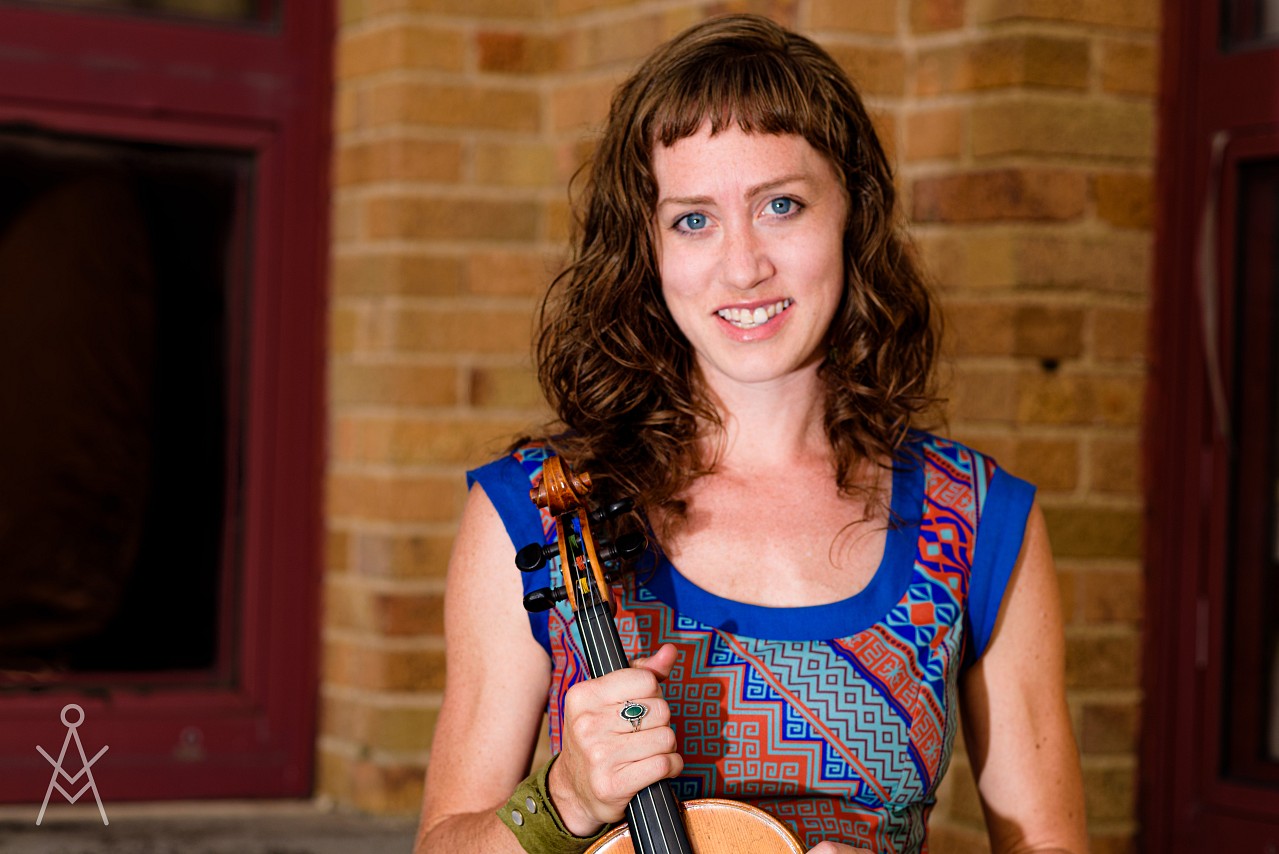
    Clara Hardie

    **Clara founded & directs Youth Volume. Both the Detroit and Marquette studios are equitable music studio, where students nurture their musical and changemaker skills while learning to collaborate with people of diverse backgrounds. In addition to classical training, DYV engages local & visiting artists during annual workshops album releases. These collaborations develop students’ positive cultural identities. Clara is also coach of “Growing Equitable Music Studios”, a virtual Course of Action for music teachers who believe every child can change the world.
    **
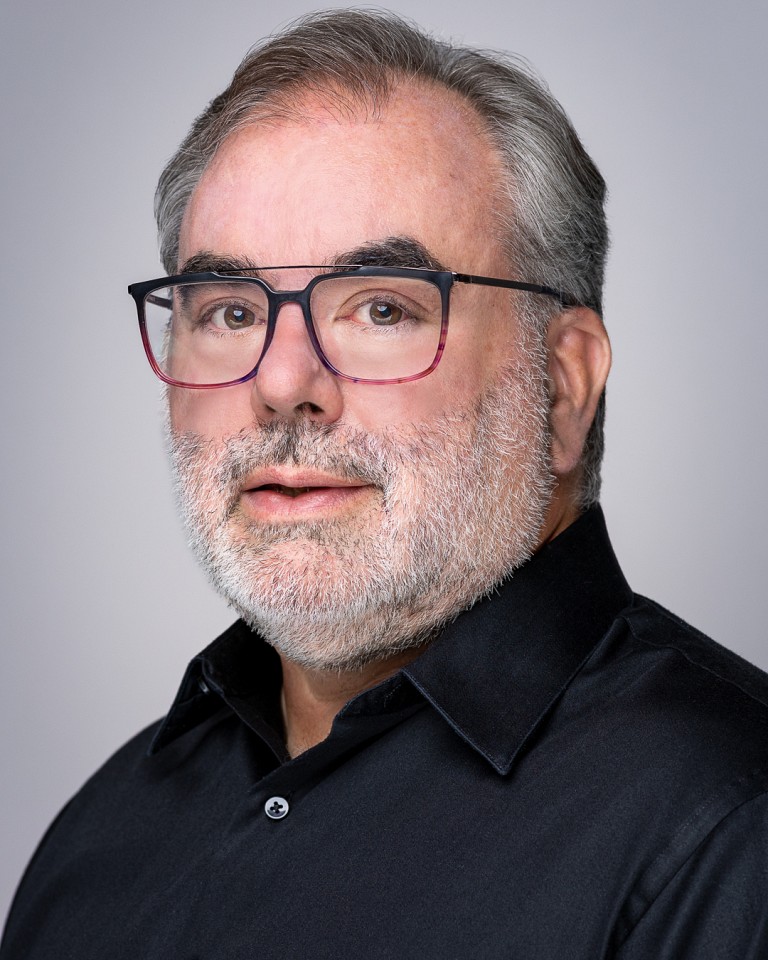
    Mark Mutter

    Mark Mutter is a registered Teacher Trainer, Violin and Viola specialist and conductor. He is the Executive Director of Suzuki Music Academy of Michigan. Mark is on the conducting staff of the Wu Family Academy, the Detroit Symphonies Youth Orchestra Program.
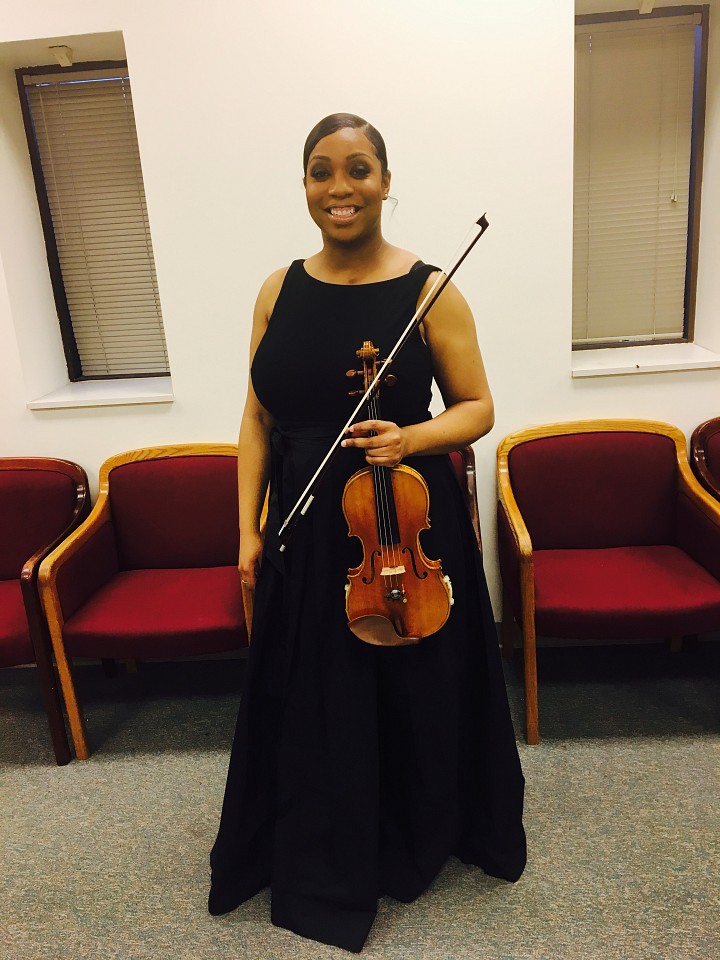
    Ashley Nelson

    Ashley has been teaching Suzuki violin and viola with for the past three years. She has received teacher training with world renown instructors Ronda Cole and Mark Mutter. Her inspiration for teaching comes from a quote from Dr. Suzuki that she lives by- “ It is in our power to educate all the children of the world to become a little better as people, a little happier.”

  • Practicing Can Be Hard

    Building Noble Hearts
    Building Noble Hearts
    Practicing Can Be Hard
    Loading
    /

    Music practice has its highs and lows. Sometimes we reach a state of bliss and flow as we find the perfect balance of competence, challenge, and creativity with our instrument. Or, sometimes we can feel like Sisyphus; over and over pushing up a hill a huge… grand piano …or something. Mastery requires effort, and I haven’t met anyone for whom consistent and productive practice is easy.

    Now let’s add family relationships into the mix. Parents fantasize about their child running gleefully to the practice room without being reminded and falling into this state of blissful and productive flow. 

    Occasionally this happens, or happens for a time, but all families…all musicians go through rough patches when it is a struggle just to pick up the instrument and start to play. 

    Brittany Gardner has been a student, teacher and parent. 

    Brittany Gardner: Practicing can be hard! Yes, that’s true.

    Margaret Watts Romney: Through her story, and with insights from education thought leader and NYT bestselling author Jessica Lahey, 

    Jessica Lahey I’m lucky enough I get to write about what I love the most which is education and child welfare.

    MWR:…we will explore healthy learning relationships, the importance of the words we choose to praise, and how to create an environment in which students feel ownership of their music.
    You’re listening to Building Noble Hearts, a production of the Suzuki Association of the Americas. I’m Margaret Watts Romney. Here, we take a look at the learning environments in which children, parents, and teachers gain new knowledge, and are encouraged to become fine individuals. Throughout this season, we’re speaking with people whose lives have intersected the work of humanitarian violinist Shinichi Suzuki, and we’re finding themes of good teaching everywhere; themes like effort, praise, and internal motivation.
    When Brittany Gardner was young, Music was part of the air her family breathed. 

    BG: My parents were both trained as music educators. And taught music in the public school, actually together for a while. Music in my home growing up was just part of fabric of lives. It was just what you did in our family, and it was part of who you were. 

    MWR: Though music was all around, it wasn’t always easy.

    BG: I do remember my sister telling me about a time she got so mad at mom that she threw her piano books across the room at her. So that happened. I can remember very vividly when I was in Suzuki Cello book 4 and learning tenor clef. and my dad helped me learn it. I remember crying and crying because it so frustrating. But he just stuck with me. My dad was really cool. He’s not an emotional kind of guy. He’s friendly and fun and really happy, but he did not get affected by my tantrums. And so he would say, “I know you can do this, try again. That’s not the right note, try again.”
    MWR: So he stayed connected with you
    BG: Yeah, he did. He stayed with me and we pushed through that.

    MWR: And as important as music is to everything we talk about here, I have to allow that Brittany’s prevailing memory is not about music…. 

    BG: I don’t remember any notes he taught me, or any pieces he taught me, but do you know what I do remember? I remember being with my dad. I remember my dad wearing his pajamas, and I’m wearing my pajamas, he brought his clarinet out, and I was playing my cello, we were just playing our music together. I remember thinking, my dad thinks I’m important enough that he’s spending his time with me.

    MWR: Struggle, connection: these are some of the elements in the recipe for successful self practicers. Students who are inspired to find the drive within themselves to strive and to learn.
    Let’s take a moment to examine where a student’s motivation comes from: Is it from an external stimulus, or from a source within?
    To find out more about students and their learning environment, I spoke with educator and New York Times bestselling anuthor Jessica Lahey from her home in New Hampshire.

    Jessica Lahey: I’ve been a teacher almost 20 years. I’ve taught every grade from 6th to 12 grade. English and Latin and writing, and I currently teach drug and alcohol addicted kids in an inpatient rehab setting…

    MWR: Over the years Jess has made close study of her students and one day she had a startling realization:

    JL: I heard from a student that she wrote paper for me on her obsession with being perfect. About appearing perfect, all of that. Her obsession with grades and points and scores as evidence of her perfection. All of that had rendered her incapable of enjoying learning anymore. That was beside the point for her. For me, that was devastating. I had taught her for three years. I had taught her and I was her advisor. I knew this kid really well. And this was a kid who had loved to learn. And somehow we had beaten that out of her over three years. That was devastating to me. The same day I read that paper, I came home and found out that my younger son who is now 14 but who was 9 at the time was incapable of tying his own shoes. I didn’t know that because he didn’t want anyone to know. He was so ashamed of it. I had done that. I had been tying his shoes for him. I had made all sorts of excuses about why it was faster, easier for me to do this kind of thing for him. And his inability to tie his shoes, was this sudden realization of all the other things that he is incapable of doing because of me. Because I have been doing those things for him. So as much as I wanted to look down on the parents of my students and be angry at the parents of my students, I couldn’t because I was just like them. 

    MWR: Jess was more focused on the outcome of her son having tied shoes than she was with the process of letting him learn to tie his own shoes. Her student was caught up with the expectation of perfection more than the process of education. Realizing this, Jess took a hard look at her own parenting, read a lot of studies about education, and wrote a book about it, The Gift of Failure. One discovery: Children who can motivate themselves, who are internally motivated, are more likely to become lifelong learners. Conversely, students who are motivated externally by sources outside of themselves often leave their discipline as soon as the motivation is removed. 

    JL: I think it’s really important to talk about the fact that extrinsic motivators can look like a lot of different things. We tend to just think of them as paying kids for grades, or sticker charts or giving kids a lollipop in exchange for something. Extrinsic motivators actually can work great in a couple of limited contexts and they can work great for a one off, trying to get a kid to do something one time, just to boost initial motivation.
    Extrinsic motivators can be those simple things, carrots and stick stuff, but you also have to think larger. Extrinsic motivators are any kind of control you put over people. Or I’m going to check the portal, and look at your grades constantly. That’s called surveillance. That’s an extrinsic motivator. If you’re going to track their kids on their phone, that’s also surveillance, that’s an extrinsic motivators. While I’m not saying we can’t do these things or can’t do these things, I’m saying we have to think about these things as extrinsic motivators and realized that doing any of those things, positive or negative extrinsic motivators All undermine creativity and intrinsic motivation.
    So, 40 years of research, including meta studies, studies about the studies, are really clear that if you want your kids to do something that requires long term focus and creativity, that extrinsic motivators are terrible. They undermine both of those things. 

    MWR: So if intrinsic motivation is what we’re after, so how do we help our children build that? 

    JL: The intrinsic motivation thing is based on three things, the autonomy, the competence, and the connection. The connection stuff is very much about talking more about process than product. 

    MWR: which are exactly the elements in the room when Brittany was struggling to learn Tenor clef with her dad. So… let’s look at that moment of struggle.
    As parents, we are hard wired to want to keep our children out of pain and fear, so when we see our children’s faces filled with concern, worry, or stress, our loving impulse is to snatch them away from the situation that is causing the stress. But these are the exact moments when the deepest learning can happen.
    Jess needed to let her 9 year old struggle to learn to tie his shoes, however much time it took, or however imperfectly he did it. Brittany’s parents stayed in connection but allowed her to struggle as she learned tenor clef.
    Our brains learn best when there is work, struggle, and effort, but what language we use to encourage kids to learn, which actions we praise, can make a huge difference. 

    JL: The reality is that when we praise kids for, “you’re so smart, you’re so talented, you’re so creative, you just fell out of the womb that way,” a couple things that happen. We get kids who become incredibly protective of that label, of “smart” and they will do anything to protect it including cheat more. James M. Lang in his book Cheating Lessons says that if you want to create a classroom of cheaters, just keep praising them for how smart they are. It undermines creativity, and you create kids that ask for help less because they don’t want to appear that they don’t know what they are doing, they will lie about their scores, they will also, as Carol Dweck’s research shows, take more pleasure in other people’s failures.
    The message around praise is this: we really need to praise kids for their effort through the process. We need to emphasize the process over the product. Praising things like, “Last night when you were doing your homework I took a peek in the room and I saw that it was a little frustrating for you and I’m just really proud of you for sticking with it when it was hard.” 

    MWR: Struggle, and praise of the process are crucial, Jess also outlined the elements that create the blissful state of “flow.” Flow is what we reach for in our studies, in sports, and with our instruments, and she says it’s not easy, but can be simple to create when you have the right ingredients.

    JL: I love to refer to Mihaly Csikszentmihalyi’s book Flow, because that is like the apex state of intrinsic motivation. When you’re doing something for the sake of the thing itself, and time and space falls away and it’s just you and the activity, whether that’s playing cello for you, or cross country skiing, or whatever it is, where you look up and you realize, “Oh my gosh, three hours have gone by, and I don’t even know where they went.”
    That place doesn’t happen without three things. Autonomy which is kind of like independence, but has more to do with giving people control over the details of a task. Competence, which unfortunately is not the same thing as confidence, which confidence is kind of an optimism, but competence is based on actual experience. And connection.

    MWR: Competence, Connection, and Autonomy. All three were baked into Brittany Gardner’s experience as a child. Musical competence was gained from a young start of music education being part of her family’s life. She had connection with her parents as they supported her studies and stayed with her through her struggles and triumphs. Then, she and her siblings all experienced autonomy as they reached their teen years, and their parents supported them as they chose their own life paths. 

    BG: Of the three of us, I’m the only one who does music as profession. It became very clear as we hit our teen years where our interests and our paths were. My sister was also involved with classical ballet. She always wanted to be physical therapist.
    My Brother every sport under the sun. He works in business.
    I respect my parents a lot for being wise enough to step back and let their children’s personalities and interest emerge.

    MWR: So Brittany got a couple of college degrees in music, became a professional musician, started teaching, and then learned even more lessons about competence, connection and autonomy when she had her own students and her own children.

    BG: You know when you’re a teacher and you ask your student to do something 5 times, and they do it 5 times, and so you move on to the next thing and you say try this five times, and they do it and they are so cooperative! Then I go home and I say, “Ok my child! Let’s do this exercise 5 times,” and then she starts crying for no reason! And I say, “I’m sorry…what?” “I don’t want to!” “…what??” I had never had a student break down in tears and yell at me that they don’t want to. But it seems like that was a regular occurance in practicing.
    It comes down to the parent is the limit which this child is testing. The teacher is the instructor, but the child tests the parent in a way they don’t test the teacher generally.

    MWR: Brittany’s adventures in parent practicing started when her daughters were young. She chose to immerse them in a music environment just as her parents had done for her. 

    BG: So, my violinist started when she was three, and whatever was done in the lesson was what we did at home. And because my daughter was only three and in preschool twice a week for a couple of hours, we had time. I think that is one of the beautiful things about starting a child very young. I don’t think that you have to start young in music lesson for them to be successful. I personally didn’t touch a cello until I was 8 years old, so I feel like a “late beginner” in the Suzuki world. 

    MWR: Side note: if you are a new listener, or new to Suzuki teaching and these ages sound incredibly young to you, go back to our season one episode called, “Skills I didn’t know my child had.” Ok. Back to Brittany…

    BG: For me as a parent, it really was helpful to start my child really young and think we had all this much time. Time to let things sink in. Time to practice without feeling rushed. I think about those early days and they were exhausting! 

    MWR: It took a lot of energy, but giving them a strong foundation early to provide later confidence was her plan. Also, she understood her daughters in a new way from working with them intensively with music education.

    BG: For me, the one on one time with my child everyday where we can practice our relationship every day is why I stick with it. Then there is this really cool side benefit that then they play music. 

    MWR: She also learned to choose her words of praise or correction carefully as she watched her daughter’s violin teacher. She avoided the broad praise terms of “smart,” and “talented,” but also learned to choose her corrective words carefully. Instead of calling a missed note a mistake, she learned to say:

    BG: Oh, “this was a surprise!” Instead of, “You were wrong! You didn’t know!” It’s like,”Wasn’t that interesting?!” To use a favorite phrase from my daughters first violin teacher, “That’s something that will help us grow!”
    It’s been really helpful to realize that growth comes from struggle and you have to validate that struggle and not dismiss it. The struggle is part of the growth and are you going to get afraid by it or mad at it or are you going to take your child by the hand and walk through it together. 

    MWR: When her children were very young, she did take them by the hand, and walked them through their struggles to achieve their family goal of music fluency. Now, as they are on the brink of teen-hood, she sees the importance of allowing space for their own autonomy and also sees her own process letting go. 

    BG: I’ve really handed off a lot of the quantitative autonomy to my children.
    I’m working towards doing a better job of handing off the autonomy of qualitative work for my children. It’s really easy for me as a string player who has string playing children to say, “I know that note’s out of tune. Let me tell you that it’s out of tune. Let me tell you how to fix it. Let’s do it.”
    And sometimes I’ll put myself in there, and that’s not the best. I’m practicing on doing better. But I will try to pin it on the teacher and go back to them as the mentor the expert as the one who really knows so it doesn’t become me against my child. I have to not be the expert here. 

    MWR: And this letting go by parents, is exactly what we need to do at some point in their development to help kids grow in their self reliance.

    JL: In a series of studies done by this woman Wendy Grolnick, she found that parents who support kids autonomy, who support kids in their efforts to do tasks the way they want to do them, how they want to do them, those kids are more able to get frustrated and to complete tasks on their own when their parents are not present. 

    MWR: Though Brittany started her daughters at a young age, she told me that she saw many students being successful in music even if they started later. I asked her, what were the most important elements to music education? 

    BG: Two things come clearly to my mind. 1) consistency 2) attitude.

    MWR:…and she gave me an example. 

    BG: Makes me think of the opportunity I had to travel with my family to Japan this last August.
    I remember going to this garden and everything was just manicured immaculately. I saw the gardener there and he was using the super tiny shears on a bush. They were so tiny! The cuts he was making were so tiny, just miniscule. And I thought to myself, “Do you even need to do that trimming right now? Clearly no one will notice if you didn’t do that today.” Around the whole grounds everything was exactly in place. Then I came back to my home in the US and on my street that day there was a giant truck that was hacking down a tree that had completely died. It hadn’t been attended to regularly. And I thought, “well, there it is!” 

    MWR: This consistency, this calm attitude of continual progress is perhaps what Dr. Shinichi Suzuki was pointing to when he said, “Do not hurry. …If you hurry and collapse or tumble down, nothing is achieved. Do not rest in your efforts;…Without stopping, without haste, carefully taking a step at a time forward will surely get you there.”
    Students have a chance to be internally motivated learners, consistently and creatively pursuing their own education. Parents and educators can support this by aiming to cultivate confidence, praising the process, allowing autonomy, and staying in connection. 

    JL: A kid who can get frustrated who has the emotional wherewithal to redirect, have that innate sense of competence, “I can do this! I can figure this out for my own,” that kid is more teachable.

    BG Staying in connection with them, supporting them, hopefully empowering them, and then saying, “You can find a way. You can do it.”

    ————————————————————————-

    Do you have an influential educator in your community like Brittany or Jess that you would like to recognize? Spencer Baldwin, Celia Chan-Valerio, and Sammy Young are some of the people who recently had stars named in their honor on the Giving Galaxy of Stars on the Suzuki Association of the Americas website. Go to suzukiassociation.org to dedicate a star, and we may acknowledge them here on the podcast as well.

    Want more people to hear about Building Noble Hearts? Share this episode on social media, or give us a rating and review on iTunes. Every review helps the podcast be seen by more people. 

    Have music to share? We love using music from our community on the podcast. Write to podcasts@suzukiassociation.org if you would like to submit your recordings for consideration.

    “Sun Up” is composed by Steven Katz and Derek Snyder and performed by the Snyder cello army.

    Prelude and Fugue from the Well Tempered Clavier in F Major by J.S. Back was arranged by Nicholas Kitchen and played by the Borromeo String Quartet

    Tuck and Point, Borough, and Caprese are by Blue Dot Sessions and can be found at (www.sessions.blue).

    You can find links on our website to all music selections.

    Methusaleh Podcast Productions gives masterful support to our scripts and production.

    Thank you for joining us in “Building Noble Hearts,” and we will see you next time.

    Brittany Gardner

    Brittany Platt Gardner began her cello studies at the age of eight after receiving a cello as a birthday present. 

    An avid teacher and sought-after clinician and speaker, Ms. Gardner finds great joy in the study, sharing, and teaching of music to children and their families. Her book “This Will Help You Grow: Advice & Encouragement for Suzuki Parents” (available on Amazon.com) has been warmly received by readers from Singapore to Australia, to the United States.

    Ms. Gardner recently completed an 11-year tenure at the Gifted Music School, where she served as the school’s Suzuki Program Coordinator. She currently serves on the board of Intermountain Suzuki String Institute and, in addition to her studio, codirects the Amichevoli Cello Choir with Kelly McConkie Stewart and maintains an active performing career, appearing with such groups as the Utah Symphony, Sinfonia Salt Lake, The Orchestra at Temple Square, and others.

    Ms Gardner holds a Master of Music degree from the University of Michigan and a Bachelor of Arts degree in Music Performance from the joint degree program between Case Western Reserve University and the Cleveland Institute of Music.

    She and her husband live in Salt Lake City with their two daughters.

    Send a message to Brittany Gardner

    Jessica Lahey is a teacher, writer, and mom. She writes about education, parenting, and child welfare for The Atlantic, Vermont Public Radio, The Washington Post and the New York Times and is the author of the New York Times bestselling book, The Gift of Failure: How the Best Parents Learn to Let Go So Their Children Can Succeed. She is a member of the Amazon Studios Thought Leader Board and wrote the educational curriculum for Amazon Kids’ The Stinky and Dirty Show. Jessica earned a B.A. in Comparative Literature from the University of Massachusetts and a J.D. with a concentration in juvenile and education law from the University of North Carolina School of Law. She lives in New Hampshire with her husband and two sons and teaches high school English and writing in Vermont, and her second book, The Addiction Inoculation: Raising Healthy Kids in a Culture of Dependence, will be released in 2020.

  • Greater Than We Would Be on Our Own

    Building Noble Hearts
    Building Noble Hearts
    Greater Than We Would Be on Our Own
    Loading
    /

    Margaret Watts Romney: Gail Johansen and Daniela Gongora are both violinists and teachers, but they’ve made music in vastly different areas. 

    Gail Johansen lives in Fairbanks, Alaska…

    Gail Johansen: Right now since it is almost the winter solstice, we have less than 4 hours of daylight. So, it’s dark most of the time. We’ve have had what I would call very mild winter. It’s 20 degrees above 0 right now.The real difference is that daylight swing. In the summertime when we have Institute it never gets dark. So it’s light all night long. I remember one time looking out my window and my neighbors were planting trees in their yard at 2am. The other day I was teaching a lesson and a moose walked by my studio window. So the student said, “Oh, a moose!” We all stopped and admire it as it wanders through. 

    MWR: Daniela Gongora grew up in Belize…

    Daniela Gongora: There are little taxi boats that you to take to go the Keys Ahhhhhh sooooo good. It’s like heaven. The water is very clear, you are on the boat and you see this sea of crystal green. It just puts you in a state of Zen because it’s just beautiful. 

    …the rustic part of the marketplace, the vendors selling rice and beans by the spoonful. A dollar for one spoon, two dollars for two spoons. Everybody goes and they have, chicken tacos if they want, or they go to other guy and who has small little mini meat pies which is more of a British influence. Growing up, my street was not paved, it was sort of just a dirt road. Instead of chalk, we drew lines in the sand for hopscotch. Some of the houses you know, in the backyard, had a mango tree in there or a lime tree.

    MWR: Though Daniela and Gail came from vastly different geographical areas, they both thrived in their small music communities. What did it take for them to create excellence when resources were limited? Are there lessons for all of us, even if we live in a community of abundance? 

    You’re listening to Building Noble Hearts, a production of the Suzuki Association of the Americas. I’m Margaret Watts Romney. Here, we take a look at the learning environments in which children, parents, and teachers gain new knowledge, and are encouraged to become fine individuals. Throughout this season, we’re talking with people whose lives intersected the work of humanitarian violinist Shinichi Suzuki, and we’re finding themes of good teaching everywhere; themes like community, independence, and spreading a vision of excellence.

    Gail’s small music community in Fairbanks, is pretty isolated, and when a student needs a new instrument…:

    GJ:… they have to call, and ask for several to be sent. Even chin rests and shoulder rests. You have to ask for about half a dozen to be shipped to you and then send back the ones you don’t like. When you need a bow rehair, you have to send it to Anchorage, or send it to the Seattle area. Because, here we are in the middle of interior Alaska. The next city is Anchorage, but it’s a 7 hour drive away. So if you want something to happen, you have to do it yourself. 

    MWR: By comparison to her current situation Gail grew up in the land of plenty—and the land of 10-thousand lakes, immersed in music in Minnesota. 

    GJ: I remember my mother made sure that we got piano lessons starting in first grade. In third grade I remember someone came to my classroom and played the violin, and I went home and asked and parents they said said sure. I remember I really wanted private lessons. Three times I asked and finally my dad said, yep, I think we can do that. 

    MWR: She was first exposed to Suzuki teaching in High school.

    GJ: I was an usher in high school for the St. Paul Chamber Orchestra and they brought Dr. Suzuki and his tour group in for a regular subscription concert.. I remember even having feelings of jealousy. “Wow, how did they do that!?”

    MWR: She just happened to be in the right place at the right time to witness the seeds of a new music philosophy starting.

    She didn’t pursue Suzuki philosophy for a few years, but serendipity hit again when she was in graduate school at the Cleveland Institute of Music. She just happened to come across a book and it resonated. 

    GJ: I remember in graduate school at CIM, I just happening up on the book “Nurtured By Love” in the Music LIbrary. I remember that I couldn’t put it down. I thought, this really resonates with me. I read the whole thing cover to cover that night. 

    MWR: Between grad school and regular attendance at Cleveland Orchestra concerts where she could attend for free as a student!—Gail enjoyed a rich musical experience. 

    GJ: Of course that does a lot for your standards and for your expectations of what can be done. 

    MWR: Meanwhile, Daniela Gongora’s early music community was in Belize City, one of the largest in the country, but finding experts in classical music when she was growing up was not easy.

    DG: We didn’t have teachers at a high skill level to help us move ahead. We started a little chamber group, it was everybody. “You know how play the cello? Let’s play Pachelbel’s canon.” Oh my goodness, I remember we would rehearse weeks and weeks and months and it would fall apart, we couldn’t get to the end of Pachelbel’s Canon. We could not keep it together.. ….

    MWR: Music was abundant in Daniela’s early years, first with piano and then violin. 

    DG: My relationship with music comes from my mom. She played the piano by ear, but she didn’t know how to read music. She would always play the big LPs. Tchaikovsky and Beethoven.

    Belize, since it was a British colony, they had a lot of pianos that were brought in. So when some of the British left, they left a lot of pianos back. Piano was the big instrument and everyone would learn to play the piano. 

    So I started on piano with this lady, we would walk there and then we saw another student with this case, it was a violin case but at the time we didn’t know what it was. So my mom, she asked, (and the student said,) “oh yes, we take lessons at the high school.” My mom said, “Do you want to go take a look and see?” So we went to observe the group class and my mom said, “Is this something you would like to do?”

    MWR: She lived near a small school that had a budding Suzuki music education program run by her eventual mentor, Sister Therese. As a child, she didn’t know exactly what “Suzuki teaching” meant, but she has fond memories of the experience. 

    DG: We had the tapes, the cassette tapes to listen to. I can recall the group classes, the private lessons, playing by ear. I remember trying to figure out Boccherini Minuet by myself. I remember having these huge group classes. And then Sister Therese would come over and she would bring some treats for us. She would come over bring some candy and give it to us at the end. It was just such a positive experience. That’s one of the things I remember. I loved playing and I loved practicing. It was truly a very nurturing environment, even at home with my mom. 

    MWR: Sister Therese was an enormous help in Daniela’s musical education, though she was not a string player herself. 

    DG: Sister Therese managed to have a lot of connections either with the US embassy or with the British High Commission. Peace Corps (volunteers) would come in and help and do their work in Central America. But occasionally there would be someone who was doing that but she would find out that they also played the violin. So she would say, “Come spend a weekend and work with these kids.” And then sometimes we would get a professor coming in from Austria. They would volunteer their time, maybe spend a year or two.

    MWR: Though she’d become a teacher, Daniela’s knew she wasn’t finished being a student. The same drive that earned her a leadership role in her old school also got her a scholarship to leave Belize and study in the States. 

    DG: So this philanthropist, Alan Schoen Feinstein, he was based in Rhode Island. He came in and said I am giving out 20 international scholarships, but you have to go home and do something your community in order to be nominated. So I said, we’re always raising money for the school, how so about we raise money for, there was a fire and we raised money for some fire victims. 

    MWR: So Daniella organized a concert, made money from the ticket sales, donated it all to the fire victims, and then reported it all in an application to the scholarship foundation.

    DG: I get this call months later, “Congratulations, you’re a finalist, you’ve got this scholarship.” You had to study in a school in RI. 

    I had been emailing back and forth to the professor, the head of the violin department. I said, “Hi I’m Daniela, I’m the Belize Student.”

    Everyone said he was tough but I said “Hey, I’m here to do tough. Give it to me.”

    MWR: Throughout their education, these two musicians, Gail and Daniela, developed in settings that fed their hunger for personal excellence. And both had the desire to connect to others and teach at very young ages. 

    Gail’s first inclination to build a community through teaching began actually when she was a child. 

    GJ: All along I knew that I had a real desire to teach. I think that the seeds of that were when I was in grade school. My mother allowed me to invite neighborhood children in and have what I called a pre-school in the basement. I remember that I made up a flier, just hand written one, and took it around to some of the neighborhood houses that had the younger children, and told them what I wanted to do. We put on plays and we were going to do arts and crafts and stuff like that. I remember singing with them. I remember putting on a musical. I’m sure they thought that this was going to be a short term little thing, but I did it for two years.

    MWR: Daniela was not quite as young as Gail when she started teaching, but as a precocious and responsible teenager at her school, she was asked to step up when a visiting British teacher was about to leave, 

    DG: She was a riot. She was great. The chamber orchestra was big now. We played Holberg suite. Very successful with it. She was there for 2 years. At the end of that time she was preparing me to take it over, and Sister Therese asked her, “Why can’t you stay another year? Please?” She was begging her, and she she said, “No, Daniela can do it,” and I said, “Are you kidding me? I am 19! What am I going to do with these kids?” So that was when I started teaching and I took over the school at that point. 

    MWR: Gail and Daniella taught at early ages, which showed not only their affinity to connect and nurture growth, but reflected their independence and leadership skills as well.

    Gail’s background of a strong music education, personal drive, and a desire to teach prepared her well for her new situation when she ended up moving to Alaska after her PhD program. In Fairbanks there weren’t world class symphonies, rich music libraries, or renown master teachers like she had experienced in school, but there was a small group of teachers who had a hopeful vision to build their community with music excellence. They started after Dr. Suzuki had briefly visited.

    GJ: He had been here with his tour group which was 1978, In that time, a few women who were in the symphony, they sent away for books, read all they could about how to do it, and just jumped in and did it. So when I got here there was a tiny seed of a Suzuki program that they had started for their own children.

    MWR: Daniela’s program in Belize had started from a chance conversation on an airplane with a Catholic Sister. Sister Therese founded the school, and she too had a hopeful vision of building a community with music excellence. 

    DG: She wanted to have a full orchestra. That’s what she wanted. I remember her telling a story of her traveling from New Orleans. She met this person on the plane and told them about the program she wanted to build. She got two violins donated to the cause, and that’s where it started. The year after, Ms. Grieve from Canada was there on a mission with her husband who was an Anglican Priest, and they were doing a church mission. And so she came, she was teaching there for a year. That’s how the Suzuki program just grew from there. 

    MWR: Once the seeds of these small music communities were planted, they were nurtured and strengthened by the connections between individuals.

    GJ: When I got to Alaska, in 1979, they were incredibly inclusive and inviting and welcoming. I think that is really the key to what pulled me in. I would say that the main thing that has been successful here is the way we have all cooperated and collaborated over the years. 

    The other thing that I think is unique about Alaska is many people don’t have family here. So they open hearts and open their homes to each other in a way that you would family. And there’s kind of a climate that feeds on itself of excellence and what can be done 

    DG: It was a very good community even though we only had so much. So we just took what we had and just ran with it. No, I must say that it takes a village and I’m very grateful because I think I couldn’t have done any of this without all the different people that have come together and shared: either if it’s a minute of their time, or put me in the right direction to do something or donated to a cause. For me it was a village. A lot was given to me from a lot of different people in a lot of different ways. That’s my way of saying thank you is by just continuing to do good.

    MWR: The collaborations and support in the community didn’t just happen between individuals, but between organizations as well. 

    GJ: The university works well with us, the public school program works well with us, the symphony works with us. Everybody’s working together in positive and productive way. We all feel like we are a big part of the same puzzle. 

    MWR: Growth in these communities was fueled by the commitment of the individuals and the connections in the community, and they gained their vision for where they wanted to grow from experiences with visiting expert teachers. 

    Which begs the question: did these communities influence Gail and Daniela to strive for excellence? Or did Gail and Daniela’s independence and persistence impact their communities? The answer is: yes. And yes. Because humans emotionally influence each other in subtle and unconscious ways. 

    This topic of unconscious emotional influence is explored in this clip from the podcast Two Guys on Your Head, in their episode, “Why are Emotions Contagious?” 

    Two Guys On Your Head: 

    Dr. Art Markman: How you do actually understand what somebody else is experiencing? and really, part of the way that you do that is by trying to mimic or simulate what you might be experiencing if you were doing the outward things that someone else is doing.

    Dr. Bob Duke: I think most of us have experienced people who… we like being around them because they make us feel better. Not because of what they say to us necessarily, or because they are complimentary of anything, but just because their emotional state brings us up a bit, and conversely there are people for whom just the opposite is true. But one thing that is interesting is to think, what are the channels of communication that convey this. One of the things that we know is an outward signal of emotionality is pupil size. We know that when we are in an emotionally aroused state, our pupils tend to dilate. It’s been demonstrated now, and there’s another study we were looking at just a little while ago, where, when people see other people whose pupils are dilated, their pupils tend to dilate a little bit too in response to that, again, without any conscious awareness on anybody’s part. 

    So again, we are talking about very primitive responses, that you can see would have a very evolutionary advantage, because the more that we understand the people that we are around, and as Art is saying, sort of simulating what someone else might be feeling or thinking like, allows us to understand more about what somebody is feeling, and thinking, or maybe doing, and you can see how those responses would evolve over time. 

    MWR: Dr.s Art Markman and Bob Duke explain that one person’s strong emotions easily spread to another since we are wired to detect what others are feeling. Gail and Daniela’s music communities were started with trust, excitement, and hope. Then in turn, these teachers influenced their communities with their own confidence, independence, and perseverance towards excellence.

    Now what are Gail and Daniela creating and hoping for their communities next?

    GJ: I am now doing teacher training at University of Alaska. I know that we are going to have a younger generation that is going to take over. 

    For example, we have two musicians in the Cleveland orchestra from our program. That alone. I’ve had two students go through Julliard new program for historical musical studies. We’ve had students really go on to do wonderful things with their music. 

    MWR: Daniela plans for more collaboration between musicians in the states and her friends in Belize, especially after the success of one visit.

    DGM: One year I also brought some of my student to work with the students there and we had a concert. We were doing the Vivaldi Double. The American students and the Belize student each, we had one on each part so they could share that. Such a great experience for them. After the did the rehearsal they put their instruments down and then just zoom went together in the room, “Hey, what’s up?!” It was like there were no barriers at all.

    So, what lessons are there from these musicians and their small communities? What are the key elements needed in order to grow to be sustainable sources of rich music education?

    GJ: It’s really your vision that keeps it growing and developing over time. 

    When I reflect on how it all happened it really is because of the inclusiveness of the atmosphere here and the spirit of collaboration and cooperation that we’ve been able to foster. I think that has allowed all of us to be greater than we would be on our own. 

    DG: The positive approach to learning. That is what I think has been the success and that’s why the school is flourishing.

    MWR: Though a community may or may not have a symphony, university, music libraries, or master teachers, the most important resource a community has are the individuals who decide to collaborate, who share a vision of excellence, and who fuel each other with their love of music…

    DG: It just feels great to play. I feel like I’ve evolved in how I love music and why it’s important for me. It’s gone from a love of it, to hey, this is actually really important for human development. Putting those two together is pretty unique pretty extraordinary and I think it’s a great thing for society and human development in the future.

    Do you have an influential person in your community like Daniela or Gail that you would like to recognize? Julie Schafer, Richard Brooks, and Melisa Cline are some of the people who recently had stars named in their honor on the Giving Galaxy of Stars on the Suzuki Association of the Americas website. Go to suzukiassociation.org to dedicate a star, and we may acknowledge them here on the podcast as well. 

    Have music to share? We love using music from our community on the podcast. Write to podcasts@suzukiassociation.org if you would like to submit your recordings for consideration. 

    “Sun Up” is composed by Steven Katz and Derek Snyder and performed by the Snyder cello army.

    Clips from the episode Why Are Emotions Contagious from the podcast Two guys on your head is produced by KUT. 

    Toothless Slope, Borough, and Castor Wheel Pivot by Blue Dot Sessions (www.sessions.blue).

    Vivace, String Quartet No 3 op 67, Brahms, The Cavani Quartet, 2009 Celebrating Excellence Album, produced by the Suzuki Association of the Americas

    Humoresque, Antonin Dvorak, Emily Yaffe. 2009 Celebrating Excellence 

    Vals, op 8 no 4, by Augustin Arrios-Mangore, Connie Sheu guitar, 2009 Celebrating Excellence 

    Methusaleh Podcast Productions gives masterful support to our scripts and production. 

    You can find links on our website to all music and podcast selections. 

    Thank you for joining us in “Building Noble Hearts,” and we will see you next time.

    Daniela Gongora

    Daniela Gongora holds a Master’s degree and Bachelor’s degree, summa cum laude, from the University of Rhode Island. She began her studies at the Pallotti School of Music in Belize City, Belize. She is the Director of the Daniela Gongora Music Academy located in Norwalk CT and performs as a free lance violinist and violist in Southern Connecticut and neighboring New York. She has received her Suzuki training through the Suzuki Association of the Americas. Her students have all received recognition in their own right as music scholarship recipients to universities. They have been accepted into advancement programs in conservatories such as The Juilliard School. Ms. Gongora is the director of the Belize Suzuki Summer Institute an endeavor which gives the students and teachers in Belize accessibility to training and higher music learning in the Suzuki Method.

    Gail Johansen

    Violinist Gail Johansen is a founding member of the Fairbanks School of Talent Education and the music director of the Fairbanks Suzuki Institute. A registered teacher trainer with the SAA, she teaches violin, viola, and chamber music as a private studio instructor and on the faculties of numerous institutes in North America. Dr. Johansen teaches Suzuki Violin Pedagogy at the University of Alaska Fairbanks. She holds a Doctor of Musical Arts degree from Stanford University and a Master of Music degree from the Cleveland Institute of Music, where she received the prestigious 2009 Alumni Achievement Award. Gail is associate concertmaster of the Fairbanks Symphony and the Arctic Chamber Orchestra and performs with the Alaska Chamber Players.

  • We’re All Performers of One Kind or Another

    Building Noble Hearts
    Building Noble Hearts
    We’re All Performers of One Kind or Another
    Loading
    /

    Welcome back to season two of Building Noble Hearts. I’m Margaret Watts Romney. Here, we take a look at the learning environments in which children, parents, and teachers gain new knowledge, and are also encouraged to become fine individuals. Throughout this series, we speak with members of the Suzuki music community inspired by humanitarian violinist Shinichi Suzuki, and we’re finding elements of good teaching everywhere; themes like perseverance, beauty, and family connections.

    Today I’ve got three stories for you you…actually they’re kind of the same story from three different people. First, Christina Graham grew up with both parents teaching piano… 

    Christina Graham: I remember so distinctly hearing the Suzuki repertoire just day in and day out. 

    Margaret Watts Romney:…Matthew Loden was a dedicated violinist… 

    Matthew Loden: I’m clearly still a recovering former Suzuki student who is muddling through a non performance career. 

    …and Kirk Cullimore who still loves playing violin and piano, but also has a full time law practice. 

    Kirk Cullimore: Kirk Cullimore, Esquire. No I’m just joking. Just Kirk is fine. Kirk Cullimore or whatever.

    MWR: All three were immersed in Suzuki lessons as children…practicing, performing…but despite their passion, despite their excellence, Chrissy, Matthew and Kirk each ended up in non-musical careers as adults.
    We’re going to do things a little differently today, I’m going to step away and and let them tell their own stories, but first some quick introductions.
    Since both of Chrissy Graham’s parents taught piano, she played too, but insisted on starting violin as well. One time, she figured out how to be a little sneaky with her own violin practice while her mom was occupied. 

    CG: …she gave me a 60 min cassette tape and a recorder and she said, “ok, you need to fill up this entire tape with practicing, it needs to be music.I figured out I could just play this in my room, so my mom will hear music coming from my room, and I’ll lay in my bed and read.

    MWR: Matthew Loden, meanwhile, was a sort of poster child for Suzuki in his home state of Texas, diligent in his practicing. When he shared his experiences with parents and teachers, he spoke of his luck going on tour with his violin and rubbing elbows with future soloists.

    ML: We also performed at the Kennedy center for Jimmy Carter. What a thrill that was. But my biggest claim to fame was having Brian Lewis as my lunch buddy on tour. 

    MWR: Kirk Cullimore’s family must have been dedicated to music, or a little crazy, or maybe both. As he was growing up his violin lessons started at 5:00am, and piano started at 6:30.

    KC: I’m pretty good at both and a master of neither. 

    MWR: I was fascinated to find that each of their lives…Chrissy, Matthew and Kirk…followed similar paths through music: starting in a supportive community, meeting and overcoming struggles, bringing wisdom from music to their professions, and finally passing on their love of music to their children. 

    ML: In 1976 I was lucky enough to be in one of the very first Suzuki violin programs in a public school in Texas. A couple years after starting the violin in 1978 as a fourth grader I was selected as one of 50 Suzuki kids from around America to tour with Dr. Suzuki and his Japanese students as part of his International Children’s Tour. The headlines in my local paper read, “Suzuki violinist Matthew Loden plays Carnegie Hall.” 

    KC: How I got into violin I have no idea. The story is they took me in a music store and had me point to one instrument and point at which one I wanted to try, and that ended up being violin, but as far back as I can remember, I’ve always just done violin. The piano came in about at the age of 8 

    CG: Yeah, I started piano first. When I was about 2, and my mom was my teacher for about the first…well I was about 7 or 8. So I started piano at 2 and then I started violin when I was 4. I had gone to a Suzuki Institute in Houston, and I heard Elisa Barston play the Saint Saens Rondo Capriccioso and she was 12 years old and I just adored her, and I insisted that I learn the violin so I could be like her. 

    KC: Well, my mom is the one who mostly practiced with me at a young age, but it was my dad who supportive as well, since, as I recall it was my dad who woke up at 4:30 in the morning to take me to violin lessons at 5:00am and took me to piano lessons before school and, so they both helped a lot. 

    CG: My mom was so exceptional when I was younger and my dad more so when I was older. He was on the faculty at the University of Colorado in the piano department, oh 25? 30 years? You know…growing up on the campus of the university and exploring the music department. I even have these memories of laying under his piano while he taught and coloring.

    I certainly recall the nightly ritual of putting in that cassette tape, and playing it as I fell asleep. 

    KC: My suzuki teacher would do group things where we met up with other Suzuki teachers. I made a lot of friends doing that, and orchestras, and Institute.

    CG: And then Institutes, I loved Institutes because that was our vacations in the summer, that was how we traveled. I remember the teachers, and these were people we would see year after year, and they were very kind and I looked up to them. 

    ML: But great teachers are also adept at creating an atmosphere of magical learning where mistakes happen and notes are missed, but that sometimes doesn’t matter, because you are trying to hit something beyond the notes. I have been blessed with many fantastic and generous teachers my entire life. Great teachers build a peer group around the child learning an instrument. And they expect disciplined practice and work that requires at its core parental involvement and support. We all need examples to look up to, and we all need help. 

    CG: Oh, Gossec Gavotte, let me tell you, that was a divisive piece. My mom had this really ingenious strategy. She would take all the book one or two book pieces and write them on little slips of paper and fold them up and put them into this bowl. She would say, “You get to draw one out, and play it.” But she stacked the deck! She put like 10 Gossec Gavotte in there. 

    ML: Falling flat on your face at the recital because your memory failed and you are trapped vamping a circular motif that kind of sounds like the Bach Double, but you’re supposed to be playing the Two Grenadiers. I’ve been there. 

    CG: I remember having battles with my dad. I remember very specifically he said, “Why are you interested in skiing? That’s such a silly pursuit! You should be practicing piano!” And so there was this wrestling that he and I did as far as trying to balance priorities. 

    I remember very distinctly around 15, 16 that I really started to take it seriously.

    I have these very distinct memories of staying up late when I was a teenager, in the basement, alone. I really enjoyed being by myself with the piano, and I remember just practicing these passages over and over again, working toward mastery. It was these micro achievements of being able to say, “a ha! I did it! I nailed that passage, and I worked really hard!”

    ML: I was also a professional violinist, and a teacher for two decades. Now I have a day job at the Philadelphia Orchestra that occupies much of my time which means my early violin training and my two degrees in music performance are no longer the underpinning of my daily bread. All those play ins, group lessons, and the nighttime Suzuki repertoire tapes looped into my dreams are now a thing of the past. I spend much of my time in an office now, not on stage and I no longer stand out in a crowd because I’m carrying a sleek black violin case on my back around the upper west side of Manhattan, heading to Lincoln Center or Carnegie hall poised to make great art in important places. 

    CG: There was a moment I thought, am I squandering talent? Would it be a real shame if I didn’t major in music?

    KC: You know there’s a lot of times in my life where think, don’t get me wrong, I actually enjoy practicing law, but I wonder, gosh maybe I should have done more with music, it was much more enjoyable and rewarding. 

    KC: I was able to use a lot of those disciple skills that not only I had developed as a kid but that I had been teaching to apply that to my law school education and be successful in that. Much like music, there’s a very analytical and technical side of law that you have to get down and that can be mundane must like practicing can be mundane. That’s kind of what practicing is, and what law is sometimes. You read a ridiculously boring statutes and case law and you have to understand the analytical and technical side of it, but then when you present it, either through writing or presentation in court or in counsel or to clients, the creativity side has to comes out and it is a performance. You’ve got to keep their attention, keep them entertained, if you will.

    CG: I ended up getting a Phd in clinical psychology, so now I practice health psychology is my specialty. There are a lot of connections between the experience of mindfulness and the experience of being in music. Whether that is as a performer or as a listener. There’s this idea that if you can turn your attention to what is unfolding right now in this moment, that can help facilitate some other really healthy psychological states, it can help cope with stress, it can help cultivate all sorts of other beneficial experiences. Certainly, I think my ability to teach mindfulness is perhaps informed by my experiences as a musician being mindful with the music. 

    ML: My Suzuki training allowed me to see how hard work could actually be fun. And that having a lot of people clap for you felt pretty awesome, but it only happened if you put yourself out there in the first place. 

    KC: Music is really what makes life beautiful for me still. It a great release sometimes, its a stress reliever at some times. Now I really relish the opportunities to do that and to think that I get to perform. 

    CG: I got really involved in the choirs in college, and then beyond college I started singing in semi-professional chamber choirs, so that is what I continue to do to this day. And, it’s my time. It is challenging as all get out, but in a completely different way, and just seeing what I can do with my musicianship, and also its not occurring in a vacuum, it’s occurring with a bunch of other people.

    KC: My oldest two daughters have been studying the violin, my next two daughters, play the cello, little boy started violin last fall. So I have two twinklers in the house right now. I may have developed some patience as a Suzuki dad. Yeah, they are good kids. 

    CG: My musical experiences as a child have really influenced my desire to instill musical appreciation in my kids. I’ve taken my older one to quite a few concerts, and, he’s starting cello. I feel like I’m going to get some massive Suzuki Karma coming my way with all the difficulties I may have given my mom over the years I’m going to reap it four fold with Owen.

    ML: So I am no longer the Suzuki kid, but my daughter is. I have discovered that it is infinitely more terrifying to sit through your child’s recital than it is to play your own solos at Carnegie hall. I know you have all shared this feeling of dread as parents and teachers yourselves. We sit in folding chairs in retirement home spaces or schools gyms and when it is our kids turn to play, we make bargains with convenient deities to ensure that the Bach that they have polished is actually rendered as originally intended without the stutters and memory lapses that twist a parent’s stomach and make our children sweat. And there is nothing as a parent you can do but sit there and watch, as the thing you love most in the world has to turn a mistake into a gesture of beauty. 

    KC: I’d love it if my kids could find a career in music, but understanding that’s not for everybody and not everybody does that. If they can just get to a point where music can be part of their life no matter what they do, that’s what I’m hoping for.

    CG: I just want to do right by my kids and I want the have them to have the same experiences I did, and not just the love of music, but also I think the fundamentals. Knowing how to read music, knowing theory, knowing how to plunk something out on the piano if they need to. Being able to identify different composers, being able to understand how Bach sounds different from Mozart. I really want to impart that in my kids. I hope that I can do that while also still respecting who they are as individuals. 

    ML: I think my daughter is learning these same lessons right now. She knows that practicing and performing music is not something to get through, it’s not just a daily obligation on a to do list. She knows that how she approaches the piano is actually teaching her how to shape her own attitude about life. 

    I believe we can give no greater gift to our children than the ability to be passionately curious and vigorously independent problem solvers who never give up. When the problems they are trying to solve happen to be learning how to translate notes on a page into their own unique expressions of self, when they learn how to tell a story through the simple shape of a phrase of music, and when they stand alone on stage and they do it in front of a room filled with strangers that are hungry for a moment of community, I think that’s a parent’s dream, and Suzuki’s real gift. 

    MWR: Music gives the gifts of perseverance, focus, and discipline…Gifts of beauty, connection, and expression. Gifts that are so impactful, so ingrained that they are evident through time, and across disciplines. 

    ML: We are all performers of one type or another, we just stand on different stages. 


    “Sun Up” is composed by Steven Katz and Derek Snyder and performed by the Snyder cello army.

    Methusaleh Podcast Productions gives masterful support to our scripts and production. 

    “Mbira” and “When” and from the album “Finding Sanctuary” by Anthony Salvo. 

    Beethoven’s String quartet number 3 was performed by the Borromeo String Quartet

    Clips from the episode Why Are Emotions Contagious from the podcast Two guys on your head is produced by KUT. 

  • Matsumoto Memoir—Sarah Hersh

    Building Noble Hearts
    Building Noble Hearts
    Matsumoto Memoir—Sarah Hersh
    Loading
    /

    Music

    Sun Up


    Transcript

    Margaret Watts Romney:
    This is Building Noble Hearts, a production of the Suzuki Association of the Americas. I’m your host Margaret Watts Romney. 

    Today, we are looking at just one environment created by one teacher, and finding themes that can be applied to good teaching everywhere such as humor, analysis, and artistry.

    We are dipping back to a series of recordings—interviews made a number of years ago with people who studied with Shinichi Suzuki in Japan in decades past. In their voices I hear curiosity and admiration as they remember their experiences. Also, I hear the inspiration, wisdom, and gratitude that they’ve kept with them since they left. 

    We’ve heard similar stories from Winifred Crock, Helen Higa, and Mark Bjork about their time studying in Matsumoto with Shinichi Suzuki.

    So while we are working on the full episodes for Season Two, we will occasionally release these Matsumoto Memoires: simple storytelling, straight from the people who were there… Lightly edited for clarity, without narration. 

    Our story starts in the 70’s, in Ohio where Sarah Hersh was studying music. She loved playing violin, was curious about teaching, and happened to have a lucky locker assignment. Welcome to this Matsumoto Memoir from Sarah Hersh.

    Sarah Hersh:
    Well, I went to Oberlin College and there was a teacher trainee there who was from Matsumoto, because Oberlin had had a Suzuki program going, and she was employed to be teaching American kids. So, this Japanese gal happened to have a locker right behind mine. And I was an undergraduate student at the time. So I got interested. I talked to Kako; I would watch her students; and when Dr. Suzuki came to Eastman to get an honorary Doctor’s degree, Kako convinced me that we should go together. So, we went up there from Oberlin. 

    And to see that relationship, to see that student, a former student, but to see the love and care, that was the special moment. And I realized that’s a mentor, that Suzuki is a wonderful mentor, and that I was really looking forward … if I could possibly work with him … that was, that would be a thrill of a lifetime! So, without knowing exactly how to do it, I went and applied. 

    And what it turns out is that really anyone who wanted to study with Suzuki, if you were from a foreign country, he figured if you were willing to get the visa, the plane ticket, etcetera, that that’s all he needed to know. Those were the qualifications, that you were eager. So, he took me on, and I went over one summer to study with him. Then, came back, finished my senior year of college, and went over there to be in the teacher-training program. 

    When I first met him, he was the sage, the mentor, the elder statesman. It was a moment of formality to be presented things. But then to see him actually get to work, when he was working with children, you see already the child in him, the spark of life that inspired him and that he found in everyone and connected with. So really, it’s the synergy that, I won’t say, surprised me, but that thrilled me to see that he valued the way people worked together, and found that motivation is going to spring from that. And so, he helped me learn that studying violin was not a difficult process, or a cerebral process, but rather fun.

    So other times that were fun were tea times, because … especially if there were foreign guests. Teacher trainees were busy. We’d bring tea and all of this. But he was hysterical. He’d tell some wonderful stories. The story of his turquoise neck tie…

    He was in Germany, young man, debonair, trying to be, and he went to a party. And another gentlemen saw him and said, “That’s the most gorgeous turquoise tie you’re wearing. It’s just stunning.” So Suzuki thanked him, very politely, I’m sure. And you know, a couple weeks passed. And they have this salon society. They’re all visiting, playing music, etc., and he wore this tie. The same guy came up and said, “That is the most gorgeous tie!” And he thanked him again. So the third time that the guy admired the tie, Suzuki said, “Okay you love it. It’s yours!”

    My dissertation was an examination of his teacher development program and his studio teaching. So, in that process I transcribed all my lessons, everything that he’d said, because I’d audio-taped them. For him, those values, It’s really pretty simple; his values, love, respect, service, and they would just shine in his work. That amazed me that you could see in a little phrase or a little moment of any lesson along the way. Those values were right there. And he was willing to share them with you.

    I mean you were putting yourself in the hands of someone who’s really working on character development, working on ability, on sensitivity. I mean, these are issues of the person rather than a musical phrase. So, he could inspire that sort of trust. There’s just something in the eyes. You could feel that. And of course from the very youngest toddler right forward, you could feel that you were accepted. 

    He’s told marvelous tales of the child who came in to play for him, who frankly could do nothing that a violinist would think was correct. Held the instrument poorly; the bow was awful; the sound was hideous. It looked like it was painful to play. And there’s the, you know, “Why am I doing this?” So, with all of those things that a normal teacher would be going, “Tisk, tisk, tisk! You know, I have this list that we must dive in!” But instead, Suzuki said, “Thank you for playing,” to celebrate the aspect that was there to honor. So, he started with honoring the person’s contribution. When you start there, you have a relationship. And that relationship’s built on trust. And he could teach that child anything.

    His lessons would be sort of half and half. You’d start with tonalization, and then you’d perform your repertoire. During tonalization, he’s standing up; he’s working with you; and you play for maybe thirty seconds; and then he gives you … he plays something, and then your job is to model that, to echo that, so it’s very close and very vital. It’s also great education because you see the illustration and you try it, and you see the illustration and you try that. You’re coming closer and closer to your model. So, there’s that kind of interaction. And that put him on the level with you. I mean, he’s willing to do this as many times as it takes for you to get it. He always shifted things a little, so it appeared to be something new. “Now let’s view it from this vantage point. Now let’s go over there.” So, that kind of collaboration was marvelous.

    Then the other half of his lesson was to hear our repertoire, and to work on our sound, our sensitivity. Really, he could have listened for 20 seconds and made his judgment, but he was sophisticated and formal and kind enough to listen to the whole work, you know, fifteen minutes sometimes. But he would take it all in because he wanted you to know, again, your performance was accepted. So, while he was busy working with you on technique it was not the case where, “Well therefore, you were not ready to really perform or to share or to express.” He let you know that your expressions, even though maybe your tools weren’t the greatest, but your musical expressions were valued.

    Well the one-on-one lessons, this was the high point of the week for me, the absolute high point of the week. And sometimes you’d get more than one lesson a week, but certainly one. I remember a time when I had played my piece … done tonalization, played one piece; we could have ended the lesson and I said, “Could I play my Bach? I’d like to play my Bach for you if you have time.” And he said, “I have thirty-three years.” (laughs) 

    Through those individual lessons, he was pulling the best out of me, and I didn’t know it was there. So that’s very special, and I’ll always thank him and treasure that.

    In tea time, he would tell us … he would put on a record. And it might be Casals. It might be Kreisler. It might be Ginette Neveu. All these wonderful, wonderful performances! Teacher trainees would sneak into his room when he wasn’t there, and we would go through his CD and LP collection because there were wonderful performances. Things you couldn’t get. So, he’d put something on. He’d play it. And he would get so excited! 

    He would be reliving how he had … this sort of scientific side of him. It’s like the artistic and the scientific side merging, so that he would be swept away by that particular performance, but then challenged to figure it out. How was it done? And so he’d pull out his violin and show you. You know, you would be listening, the music was just going along. And he’d pick one out. And he’d copy it. And the music’s going along. “Oh, I think he does this, this way.” But he brought to life what an artist might do, made you feel that the artist was right there with you, and that you could take steps to find that artistry. That artistry is not something very high up or far away, but artistry is something in every life, something that we can approach, and indeed we can find.

    There are the fun stories Suzuki would sit on one side of the stage, and there would be a screen. And the child or the player would be on another side of the screen so the audience could see both of them, but Suzuki couldn’t see the person playing. And the person would play. And Suzuki would say, “Oh, that was a wonderful performance. I am really so glad you played for me. Now if you wanted technically to improve your work, you could probably lower that right elbow of yours about an inch. And you know, your pinky on that left hand if it were curved it’d be slightly better.” From the sound and from the feedback that the sound gave him, he could construct how the sound was being produced.

    I knew how to work my way towards a mechanical, technical kind of a solution. But to build a bridge! You know, “How am I going to get from being able to use my analytical tools towards this kind of nebulous artistry business?” So I had to work through a lot of that, but through it all, whether it’s a Beethoven concerto, Neveu, he found a time in every lesson to also inspire me and help me reach towards artistry. 

    He’s going to use that potential to speak musically, right from day one. And I think he does that even with young children. That’s the beauty of the way he works. That artistry is, again, not something up high, not at the end, not something you do in college, but artistry is something you can reach as a three year old. 

    Now I’m thinking also of my students, my college students, since we’ve just had our commencement. I have seen such a wonderful development in those students, those college students. It’s a journey to understand Suzuki teaching principles and to put them to work in a fashion that rings true for that new teacher. This is not a blueprint. This is not a recipe. It’s not a series of steps. So for them to find how they can think about these principles and bring those alive in their classrooms, it’s been a journey. But I’ve been there for that journey. It’s been so wonderful to see that journey. I’ve just am so thrilled. And to celebrate that journey, it shows me what Suzuki, a little bit what Suzuki felt when he had my graduation.

    When I think back to graduation from the Matsumoto Program: he would suggest to you, “I think you’re about ready to graduate,” and that could happen anytime. It didn’t happen only in May, or December, or you know, no month. There was no year attached to it. It could happen after a few months, a couple of years. Different people; different tracks; different feel! So, he would suggest … you know, it may take you by surprise, I know it took me by surprise … and it’s this great affirmation. But then he wanted you to have the opportunity to agree. “Do you also feel you’re ready to graduate?” So then, when you have both agreed to graduate, and then you plan your graduation recital, “Wow, is this a celebration!” And it’s something you know you’re sure of.

    So, I can remember that I graduated after three years of study. I knew I had absorbed what I could absorb. What he could give me, I feel that that is such a part of me that it can’t be lost.

    It’s a boundless sense of possibility that Suzuki has given us, that in any situation there’s always something constructive we can do. And if we do nothing, that was a choice. We can’t go backwards. That’s not a choice, but we can choose to do nothing, or we can choose to do something. Let’s choose to do something! How simple, yet how profound. And once you’ve chosen to do something of course you’re going to choose something positive, and then get to it! Take a step.

    Suzuki said, “Isn’t wonderful to have a profession where we can walk together holding hands?” I think that’s part of the way we’ll do this, that no one student or no one individual is going to be another “Suzuki.” But if walk together holding hands, we can do a lot!

    Margaret:
    Thank you to Sarah Hersh for permission to use her interview. 

    Our theme music, “Sun Up” is composed by Steven Katz and Derek Snyder and performed by the Snyder cello army.

    If you heard ideas here that could be helpful to your own teaching environment, help us spread the word about the podcast by giving us a rating and review on iTunes

    Thank you for joining us in “Building Noble Hearts,” and we will see you next time.

    Sarah Hersh

    Sarah Hersh is Associate Professor of String Education and Violin at the Crane School of Music, State University of New York Potsdam. Since founding Crane’s National String Project in 2000, she has developed a generation of string teachers and has helped university students provide quality education to community children through the violin, viola, cello, bass, and harp. 

    Dr. Hersh studied with Dr. Shinichi Suzuki for three years, graduating from his Talent Education Research Institute in 1976. Her 1995 doctoral dissertation is titled Music Educator Shinichi Suzuki: His Teacher Development Program and Studio Teaching. She is a registered Violin Teacher Trainer through the Suzuki Association of the Americas.

  • Matsumoto Memoir—Mark Bjork

    Building Noble Hearts
    Building Noble Hearts
    Matsumoto Memoir—Mark Bjork
    Loading
    /

    Music

    Sun Up


    Transcript

    Margaret Watts Romney:
    This is Building Noble Hearts, a production of the Suzuki Association of the Americas. I’m your host Margaret Watts Romney. 

    Today, we are looking at just one environment created by one teacher, and finding themes that can be applied to good teaching everywhere such as connection, powerful observation, and humor.

    We are dipping back to a series of recordings—interviews made a number of years ago with people who studied with Shinichi Suzuki in Japan in decades past. In their voices I hear curiosity and admiration as they remember their experiences. Also, I hear the inspiration, wisdom, and gratitude that they’ve kept with them since they left. 

    In season 1, we heard a similar story from Helen Higa about her time studying in Matsumoto with Shinichi Suzuki.

    So while we are working on the full episodes for Season Two, we will occasionally release these Matsumoto Memoirs: simple storytelling, straight from the people who were there… Lightly edited for clarity, without narration. 

    Our story starts in the 60’s, in Minnesota, when Mark Bjork was heading to an intriguing concert. He was going to see a tour group of very young Japanese children playing complex concertos brought to North America by Shinichi Suzuki. Welcome to this Matsumoto Memoir from Mark Bjork.

    Mark Bjork:
    There was an opportunity to hear, to go and see and hear the tour group. So I was curious about this, because it was something new and people were talking about it, and so forth. So I went, and a group of us piled in a car and drove—got up at three o’clock in the morning and drove to Macomb, Illinois. It was in fall of ’66. The tour group was there, and the format they were using… Suzuki would do a workshop demonstration kind of thing in the afternoon, followed by a concert in the evening. The workshop was absolutely fascinating because he was talking about very, very sophisticated points of violin playing. The kind of thing that certainly other people had talked about by generally not in dealing with young students. And then he had some of his students demonstrate these points. And it was quite obvious that there was something very special going on. Well that evening was the concert, which completely expanded my viewpoint of what could be done with children. This was a group of eight children, and as we were told, there were hundreds more in Japan. So I felt that I had to find out as much as I could about how this was done. And that’s how it all started. 

    Got as much knowledge as I could from what was available in the US: I read everything that I could, went to visit various people, had many long phone conversations. I mean there was just a lot of exchange at this time with people that had had direct contact with the man. 

    And then I started to teach. Of course I made mistakes at the beginning, and did a few things right, and learned as it went along. Then a number of years later, I was able to go to Matsumoto. At that time, I was with University of Minnesota Extension; I had a quarter leave, so I spent three and a half, four months in Matsumoto watching him. And that was in the fall of ’73.

    But basically I sat beside Mr. Suzuki, and watched him teach seven days a week for almost all of that time, with the exception of a few side trips to other cities to watch some of the other teachers. And it was absolutely fascinating. I’m really glad that I had been teaching for a number of years and actually had brought students through his entire curriculum by this point, because I think I was able to appreciate and understand more about what was going on. I mean it certainly helped dealing with the language barrier. I think if I had not done any teaching and knew virtually no Japanese, it would have been considerably more difficult.

    I think there are a couple of things that struck me really very, very strongly, and I’d had certainly indications of these things. One of them was that he really, really bore out his philosophy as it’s been presented, and the concept that every child can learn and can learn to a very high degree. And then watching him, you know, he would never give up with a student. Working in very, very small steps and building on each success was wonderful to watch.

    I think one of his big successes had to do with the fact that he was able to make every student feel like they were, if not the only one in the world, certainly the most important one, and that their development and their learning was the most important thing. And that was really, very impressive to watch.

    And he was also able to meet them at what ever level they were in their playing, whatever level they were musically, what their age was when he was dealing with the younger students. It was really quite amazing to watch this. And I think it was instinctive with him. I mean I know he hadn’t had any education psychology courses or anything like this. He just instinctively understood people. We could say children, but it wasn’t just children. It was people: because he was the same way with adults, the teachers that were coming back for lessons sometimes. 

    The other thing was, one point teaching. And this was very, very interesting for me to watch because he literally would talk about only one thing in a lesson. I mean the lessons all followed the same format. He always started with tone study, and then he would have them play a piece of repertoire, and then he would say one thing. And as he explained this to me, he said, in his teaching in the past he had talked about many different things during the student’s lesson, just as most of our teachers do and most of us find ourselves doing, even though we try not to perhaps. He said, you know, a number of things would be talked about during the lesson and then the student would come back the next time and possibly have made some progress on one or two of those points. But he said, “If you concentrated on one, then the student could really take care of this,” so that when they would come back for the next lesson, that was taken care of. And they could move on to something else.

    But besides the very intense concentrated work like this, I think the thing that was so amazing was his diagnostic skills, because he could analyze on the spot the student where they were violinistically, musically, and come up with something invariably that was key to their development. And he would make his point with them, and then he would make sure they understood what it was and what they were to do. And then that would be the end of the lesson. So some of the lessons were very short, probably would be unusual if it was more than fifteen minutes, because he would make his point during that time. 

    Suzuki put a very heavy burden, shall we say, on teachers, because he would say, “If the student was not succeeding, it was because the teacher wasn’t breaking things down into small enough points.” In other words, everything should be broken down into little steps where the student could succeed and then you could build on this. 

    He would talk about this one point, and want it to be taken care of. But he also was understanding about sometimes he was giving them a very big point and he seemed to know when they could take a small point and when they needed a bigger one. 

    I remember watching a young man who must have been eighteen, nineteen who was a very, very highly developed violinist. He was about ready to leave to go to Europe. He was going to study. He was going to study with Arthur Grumiaux. He had been accepted as a student. He played the fugue from the G Minor Bach Solo Sonata, and it was beautifully done. Beautifully done technically, beautifully musically, so forth! And I thought, “I wonder what he’s going to say now?” So he spoke to him of course in Japanese. He turned to me and said, “His point is second, third and fourth violin must sing more,” meaning … referring to the many, many chords in it, and how he must be aware of the voices, and so forth. Then he turned to me aside and he said, “Sometimes one point take very long time,” because this is the kind of thing that you work on for a lifetime, you know! 

    There was a wonderful sense of humor there, too, but also a “seriousness” in what he was doing. The lessons were all business. I think sometimes, you know, in this country particularly in the early days when he would come with a group of children and he would do various games and things, and people got very caught up in the games. But the games, from what I saw, were things that he did when there were visitors around. But the lessons tended to be all business, light-hearted sometimes, but directly to the point.

    The joy was always there! And the joy was a very wonderful, internal joy from knowing that the students had really done well, that they were developing. They were experiencing the beauty of music; the communication of the composers he so often spoke of. So that was the kind of joy, it wasn’t, you know, “Haha, aren’t we having fun at this game?” Not that they didn’t when he did these things, because they certainly did. He had a way of relating to children in this way, but always with the highest of standards. 

    There was a time he, it must have been around 1980, give or take a year or two, that he came to the US and Canada. He wanted to do four workshops with students and one of the ones he chose to come to was Minneapolis, which I was delighted and scared about because we had to put this thing together in just a few weeks. We did have a big statewide festival then that usually drew around a thousand kids. We were able to change the date to agree with his schedule to bring him here. But I also thought as I set it up, and he was going to be here for a few days in between things, I thought, “Well, let us give him a day to recuperate. He was, you know, about eighty at the time. I thought this man is getting on. Well, he practically went out of his mind. We had to go out and round up some students for him to teach because he was really only happy when he was dealing with students, children, and teaching. So we did. We found some place and hauled them out of school or something, and he taught them and he was happy!

    When I was president of the SAA, one of the first events that I had to kind of become involved in was a visit that he made to the ISME, the International Society of Music Education. He had been invited as a special guest. And it was held in London, Ontario. So we had a group … you had to have students. He couldn’t imagine, I think they wanted him to give a speech, but he couldn’t imagine doing anything without having children there, students. So we got together a group of students, of advanced students from the US and Canada, and got them there and rehearsed and they performed. And again he was really only happy if he was with them. Well, one day, there was a free afternoon. And one of the families, one of the students was from London, invited everyone to their home for a picnic. So we were there, and the kids were doing things as they would, and all of a sudden they sort of took off. This was kind of almost a rural area. And they took off across a field to somebody else’s house for who knows what. Well, he wanted to go with them! So, he went running along. We came to a … there was a fence and over this fence was a stile, you know, a couple steps up and a couple steps down. Well, it had been there for a very long time. And I looked at this and I thought, “Oh, oh,” because it didn’t look very secure at all! So, he starts running up this thing. Well, he got up on the top step, and the wood gave way. And he fell over backwards. I was right behind him, and caught him in my arms fortunately or who knows what would have happened. Well, he just brushed himself off, and climbed over the fence, and went on and joined the kids in whatever they were doing!

    He was not only a great philosopher, I think we’d have to say, but he was also a great teacher and a great violin teacher. And he distilled technique, the approach to technique, in so many ways. Maybe I often think it’s because he didn’t have the baggage of many traditional teachers. Perhaps because of coming out of another culture, he didn’t have the baggage that it had to always be done only one way. But I think it’s very easy to get caught up in the technical aspects of the teaching, because they are all so fantastic too, and overlook the philosophy. 

    I think that if we look we can see that it has had a profound effect not only on music education but really on early childhood education in general. People may not know exactly where it comes from, but it is . . . I mean just the demonstration of what can be learned by virtually every child is … the threshold has been raised, the bar has been raised so greatly. I think of when I was a student in junior high, for example, what was thought of as being really rather unusually good for junior high is now what we’ve come to take for granted in many six and seven-year-olds. 

    I think at first I think we were very worried what would happen when Suzuki was no longer with us. I think that’s partly because those of us that were able to have personal contact with him, much was based on the personal contact. I mean it was so profound. He was such a charismatic individual and made everybody feel like they were the most important person in the world. 

    You know, the impact on my life in general is the basic approach to people, I think is the important thing. And the thing that was so well rooted that people, people can, can learn, people can grow, people will grow, and to approach another human being as someone that has the potential for growth and development. 

    A certain spirit of the whole movement has continued. And I think will continue. 

    MWR:
    Thank you to Mark Bjork for permission to use his interview. 

    Our theme music, “Sun Up” is composed by Steven Katz and Derek Snyder and performed by the Snyder cello army.

    Thank you to Methusaleh Podcast Productions for valuable technical support

    If you like what you heard today, share the episode or give us a rating and review on iTunes so more people can find us.

    Mark Bjork

    Mark Bjork, Professor of violin and pedagogy at the University of Minnesota School of Music, is a graduate of Indiana University where he studied violin under the renowned pedagogue Josef Gingold. A past president of the SAA, Mr. Bjork is recognized internationally as a leader in the field of Suzuki Talent Education. In 1967 he started one of the first Suzuki programs in the United States at the MacPhail Center For Music in Minneapolis. Workshops, master classes and clinics, often related to Suzuki Talent Education, have taken him throughout the world. His former students include orchestral musicians, chamber music performers, teachers, and many happy amateurs. Bjork is the author of Expanding Horizons: The Suzuki Trained Violinist Grows Up.

  • Bringing Your Gifts and Feeding a Hunger that the World Has.

    Building Noble Hearts
    Building Noble Hearts
    Bringing Your Gifts and Feeding a Hunger that the World Has.
    Loading
    /

    Have you ever felt so focused on the project in front of you that the rest of the world seemed to disappear? Perhaps time stood still? You felt in complete harmony with things around you? This place is a source of personal satisfaction and great creativity. Today we talk with Alice Ann O’Neil about how she attains this state of being, explore what it is, and find out how her Ministry as a Sister of Charity informs her teaching. 


    Music and Clips


    Transcript

    MWR: Did you have thoughts about becoming a nun when you were little? 

    AAO: I did feel a call when I was a teenager to be a Sister. When I was 18 I told my parents that I wanted to be a Sister of Charity. We had Sisters of Charity in the town I where I grew up. They were convinced I was wrong about this, and so my parents actually forbade me from doing it and insisted that I go to university. They said, once you go to university, you will see what the whole wide world has to offer and you won’t want to do this. 

    I’ve been a Sister of Charity for 14 years now. 

    MWR: Alice Ann O’Neil is a Catholic nun who belongs to the religious community of the Sisters of Charity of Cincinnati founded in 1809 by Saint Elizabeth Ann Seton. She performs and teaches cello, and trains cello teachers. I met Alice Ann a few years ago when she taught some of my students, and she might have felt me staring at her a little longer than was socially acceptable. I had never spent time with a Sister of Charity, especially one who taught the cello. I didn’t want to be rude or nosy, but I had so many questions I wanted to ask her: How did you decide to become a Sister? How does being a Sister affect your teaching? Are there things you have learned from your ministry that I could apply to my own teaching?

    I finally had a chance to ask her these questions during a series of phone conversations. 

    You’re listening to Building Noble Hearts, a production of the Suzuki Association of the Americas. I’m Margaret Watts Romney. Here, we take a look at the learning environments in which children, parents, and teachers gain new knowledge, and how they’re encouraged to become fine individuals. Throughout this series, we speak with members of the Suzuki music community inspired by humanitarian violinist Shinichi Suzuki, and we’re finding themes of good teaching everywhere; themes like listening, community, creativity.

    This is our last full episode of Season One. In the upcoming weeks we will occasionally release more Matsumoto Memoirs, then in early 2018 return to our regular episodes exploring the current Suzuki teaching community of teachers, parents and students. 

    This season we’ve explored many of the pillars of Suzuki teaching—personal growth, community, listening, holding a vision of the future, and the value of an early start. For one final pillar, we are going to hear from a psychologist, a rock climber,, and a humanitarian violinist, but mostly from a Sister of Charity.

    AAO: I started playing the cello in public school in 4th grade. I had a very incredible experience the very first time the teacher put the cello into my hand. I just felt like never I wanted to let it go. It was an immediate thing. Almost like love at first sight. 

    There was a very strong belief that you were either born with talent or not. My teachers had decided that I was born with talent because my Great grandfather had had a doctorate in music. 

    My great grandfather was a famous Canadian musician and most people knew him. He had written the march for the RCMP, the Royal Canadian Mounted Police.

    They play his march actually every day for changing of the guard in Ottawa, still. 

    I, of course, had never met him, but somehow this concept was that talent passed down through DNA and your genes. 

    My sisters both played violin also. One of my sisters was deemed having talent, and one other sister was not. So she was put in the back of the second violin section and not treated very well by our teachers. I was sitting principle cello and given every opportunity that could possibly be given. Even as a child I thought, “This is not fair.” 

    MWR: She had an instinct that the musical system she was raised with wasn’t fair, but she didn’t yet have information about any other way to teach and learn music. She loved her cello very much, had a life filled with students, and then a birthday present changed her world.

    AAO: 1994 I was Living in Baltimore MD, and a friend of mine’s mother who was a Suzuki teacher in L.A., she bought me three books for my birthday that year: Nurtured By Love, Ability Development from age Zero, and To Learn With Love. I thought, “This is a very strange gift, but thank you.” Then I threw the books on my shelf. Then my friend’s mother decided to call me just about every day for a couple of months because she really wanted to talk to me about Nurtured By Love. So finally she wore me down, and I thought, “well if I just read it she will stop calling me every day.” 

    I read it in one sitting. It was so inspiring to me. I think it instantly changed my life. When I read the words of Dr. Suzuki that every child can learn, anything is possible; it changed my whole belief in my own potential. I was teaching at the time and I thought, “Boy, this changes the potential of every student that I teach. It’s not that they’re born with talent. They just can develop talent, and then I thought, “I need to go get training.”

    I started apprenticeship style training with Alice Vierra in Virginia. My first lesson with Alice Vierra was so nurturing, and her voice was so calming that I just thought, “Is this actually teaching?” I had only known that teachers kind of raised their voice and pushed you and spoke strongly.

    What blew my mind was at the very end of my first lesson, Alice Vierra said to me, “Well, I have this binder with all of my resources, let me just go copy it for you right now,” and I said, “You would do that for me?” and she said, “Of course, all Suzuki teachers share all of our knowledge with each other because it’s for the good of the children.” 

    I just broke down crying. I couldn’t believe that someone could be so generous and want to help me so much. Then, I understood it better the way she said it: it’s for the children. 

    MWR: This concept of caring for the children of the world has become a central part of Alice Ann’s teaching philosophy. 

    AAO: Suzuki teaching to me, and the way I define it is caring for and teaching children of our world. I see that is the whole point of Suzuki teaching—how we care for the children that we have been given the responsibility to care for. But by caring for these children that we teach, we are in fact changing the world and caring for many people. Not just their families, our communities and our studio, but the children of the world are affected when you care for one child. 

    MWR: Understanding this connection between teaching cello and serving the children of the world makes Alice Ann’s decision to become a Sister of Charity a natural step. She was first interested when she was 18, her parents forbade it, so she listened to them and went to Boston University, but the church was never far from her mind.

    AAO: I did go to University and was a cello performance major to Boston University. I had a Spiritual director, all through the time that I was living there. She happened to also be a Sister of Charity. We would meet every week and talk and share about how God was moving in my life. 

    After I was finishing graduate school, I don’t know what exactly sparked it. It started when I was 30 and I thought, there is something missing. There’s something not right. It wasn’t about the fact that I wasn’t married. Because I was very fulfilled in my life with my career. I was praying about this, wanted some guidance, and I felt a very strong call to be a Sister. 

    I don’t know if I really can explain that very easily. So I started talking to some Sisters. I started exploring different communities to see which community matched my spirit. I was very happy when I found my family which is the Sisters of Charity in Cincinnati.

    MWR: It’s common to think of Sisters being teachers or nurses, but not cello teachers. What other occupations can Sisters hold?

    AAO: Any job you can think of under the sun. There are Sisters who are police officers, fire men and fire people, administrative work, presidents of universities, nurse practitioners, psychologists, psychiatrists.

    Basically, Ministry is meant to be taking your gifts and feeding a hunger that the world has. 

    Alice Ann’s work as a cello teacher is her Ministry. I asked her if she noticed a difference in her teaching after she became a Sister of Charity.

    AAO When I begin teaching, I always take a few moments to prepare myself for the new people entering my studio and my presence. It’s taking care of my own stuff so that I can just clear the space among us. So I begin every period before lesson with prayer, and centering myself, and becoming fully present in the moment that is going to be with these people. I think what happens then very, very often in my lessons, I experience a feeling of flow. 

    MWR: Flow. Clearly, flow is a powerful experience. I had heard this word used in the context of psychology, but it seemed like Alice Ann was coming from a different point of view. 

    AAO: The word flow to me means tapping into some kind of universal energy. Which in the Catholic faith we might call the Holy spirit. It is a spirit of Creativity. By opening yourself and just placing yourself truly present in the moment you are in and going moment by moment, there’s so much ability to tap into the universal idea of creativity. 

    MWR: A focused concentration, a feeling of being connected to things around you, the loss of ego, a suspension of the cares of time. Alice Ann relishes this state of being. It sounds very similar to a state of consciousness defined by Hungarian Psychologist Mihály Csíkszentmihályi, who is known for his studies of happiness and creativity. 

    Csíkszentmihályi interviewed experts in many fields, and reported what they described. 

    M.C.: For instance, you are so involved in what you do, that you lose your sense of time. You are so enraptured by your doing, you are completely caught up in what you are doing, you don’t think about the past, the future. It’s like a present that is stretching out, 

    And one way of saying it is the condition, the state in which we are feeling fully alive. We are fully involved in what we are doing and in harmony with the environment around us.

    A well known Rock climber that I interviewed, he was going up Yosemite. He says, “You are so involved in doing this thing, that after a while you are not thinking that you are climbing the rock, you are just oozing up, trying to find the little nubbins of rock that will allow you to go up a few inches here a few inches there. It becomes like you are dancing with the rock. You’re both involved with this climb. You’re in harmony with something else that you’re a part of. That is all of these flow experiences, whether it is music, or or chess, or science. You are part of something that you feel in harmony, either intellectually or cognitively or emotionally a part of. 

    MWR: Whether flow comes from a universal, mystical place or a psychological state, flow is clearly a desirable place to be and a marker that you are achieving your personal top performance. I asked Alice Ann what she does to get there?

    AAO:The number one thing that you need to not do when you’re teaching is worry. Because worrying takes you out of the present moment. If you are younger teacher, I often remember I felt this in my 20s, I worried that I was doing the right thing or choosing to work on the right thing in the right way. Worrying immediately pulls you out of the present moment and takes you out of the possibility of truly inspired flow. So how do you not worry? You have to have more experience. You have to just keep trying. Every day teaching, trying to be better. Setting your intention is very important before hand.

    Having the best training you can have is excellent. In our Suzuki association our training programs are so wonderful. And we have very detailed information that we share with people about how to teach well, but we continually change it and develop it and evolve it and then we share that too. We also do that through attending conferences, and talking with one another, observing each other’s teaching, experiencing different types of teaching from people. All of this helps you grow. Then you need to let it go and trust yourself that it is in there and you can pull on that experience to help you in the moment. 

    MWR: Alice Ann had one experience in particular with a student where she learned to trust herself and stay in the moment.

    AAO: I had a student in Columbus whose mother called me for three years and asked me to teach her. I said no because she was severely disabled and had no use of the left side of her body. So her mom had called me for several years and asked me to teach her and I did not believe in my own ability to teach her, and that’s why I said no, because I thought I couldn’t know how to teach her. So that’s an example of not trusting myself.

    So finally the mother said to me, “My dream is that my daughter could play Twinkle Twinkle Little Star. That’s it. All I want is for her to be able to play that.”

    There was something about the sincerity of her dream which touched me, and so I said yes. And she started bringing her daughter to me. So because I had virtually no expectations of my own ability to help her, and we had no idea, the mother and I, how we would help her to to play Twinkle, we were just present in the moment together and we went with whatever we felt drawn to do with her. 

    So I started with my pre-twinkle steps and I just would try to have her move her fingers and try to have her sing and try to have her do all the things the pre-twinkle kids do, except I had more patience said, “I don’t care how long it takes, we’re just going to stay here and we’re just try.”

    Three or four years into this process this girl learned to play all of her Twinkle Variations.

    As musicians we think it’s very powerful if you’ve elevated your playing to concertos or solo Bach but Twinkle Twinkle Little Star is truly the transformative moment when everyone learns to play.

    That’s an example of what can be created if you have the intention of bringing your gifts to share with whomever you’re working with.

    MWR: THAT is flow. Trusting yourself, being in the moment, creating new approaches—Helen Higa, who we heard from in our first Matsumoto Memoir episode, observed the same process from Shinichi Suzuki.

    Helen.Higa: It was just very in the moment and it was just him watching and observing and then trying something out and it would work or it wouldn’t. I think that’s his legacy, that if we stay constantly in the moment and we constantly are observing and reflecting and thinking, we’re going to come up with new ways and fresh ideas and this is what he wants.

    MWR: Whether we are teaching students, practicing with our children, studying music, climbing rocks, or writing poetry, a creative flow state is possible. Take a few moments, clear a space, be in the present moment, trust yourself, and then give your whole attention to the project in front of you and start creating. 


    Do you have questions for Alice Ann or any of our other podcast interviewees? You can reach them in the General Suzuki Forum under the Discussion tab at suzuki association.org. 

    Have special teacher like Alice Ann in your life that you would like to honor?

    Stars have been recently named for The Chaparral Suzuki Academy Faculty and Michael Sutton. Also, a star in memory of Ms. Jenny McGraw has recently been added to the Giving Galaxy of stars on our website. Go to Suzukiassociation.org to view the galaxy or dedicate a star. We may feature them here on the podcast as well. 5:40

    Thanks for listening we’ll be back in a few months with a brand new season of inspiring conversations with people touched by Suzuki. But keep an eye on the podcast feed in the meantime. We’ll be releasing gems periodically.

    **

    Alice Ann O’Neill

    Dr. Alice Ann M. O’Neill has enjoyed being a cellist for 44 years and continues to perform chamber music and solo concerts regularly. She also spent many happy years performing in professional orchestras and opera orchestras in Boston, Miami, Baltimore/Washington, Illinois/Iowa and in Ohio. Her passion for playing the cello is rivaled only by her love of training Suzuki Cello Teachers and teaching cello Suzuki families at the Cincinnati Cello School in Cincinnati, Ohio. She teaches many teachers private lessons on-line and in-person to help deepen their playing and teaching abilities. Dr. O’Neill also trains Suzuki Cello Teachers at institutes and workshops throughout the US and Canada. She is a Catholic nun and member of the Sisters of Charity of Cincinnati.

  • Skills I didn’t know my child had

    Building Noble Hearts
    Building Noble Hearts
    Skills I didn’t know my child had
    Loading
    /

    When is the ideal age to start a music education? Many teachers start students as young as 3 and 4 years old, but Dorothy Jones took to heart Dr. Suzuki’s admonition to focus on the babies. In this episode, we hear about Dr. Suzuki’s thoughts on an early start, the development of the Suzuki Early Childhood Education program, and explore the musical possibilities for babies and the adults closest to them. 


    Music

    “Sun Up” is composed by Steven Katz and Derek Snyder and performed by the Snyder cello army.

    Piano Sonata No. 12 in F Major, by MOZART—performed byPaavali Jumppanen, piano

    Prelude in G Major Op 32 No 5 by Sergei Rachmaninoff was played by Grant Moffett

    Sonata number 3 in C major by J.S. Bach was played by Katie Lansdale

    Twinkle Twinkle Little Star was played by Della Gardner

    Methusaleh Podcast Productions gives masterful support to our scripts and production. 


    References

    Newborn recognition of 1) mother’s voice, 2) native language, 3) stories, and 4) songs heard in utero:

    1. DeCasper, A. J., & Fifer, W. P. (1980). Of Human Bonding: Newborns Prefer their Mothers’ Voices. Science, 208(4448), 1174–1176.
    2. Moon, C., Cooper, R. P., & Fifer, W. P. (1993). Two-day-olds prefer their native language. Infant behavior and development, 16(4), 495-500. 
    3. DeCasper, A. J., & Spence, M. J. (1986). Prenatal maternal speech influences newborns’ perception of speech sounds. Infant behavior and Development, 9(2), 133-150. 
    4. James, D. K., Spencer, C. J., & Stepsis, B. W. (2002). Fetal learning: a prospective randomized controlled study. Ultrasound in Obstetrics & Gynecology : The Official Journal of the International Society of Ultrasound in Obstetrics and Gynecology, 20(5), 431–8. 

    Transcript

    Margaret Watts Romney: When exactly is the best time in a child’s life to start music the study of music? 

    Dorothy Jones: If you can talk to the mother before she has her first child that is the absolutely best time to talk to them about the kind of environment they would like to create for their child, what their dreams and hopes are for their children. And then when they hear me say things like,”The kind of environment that we are considering in the Suzuki environment is one that’s filled with beautiful music,” When the parents hear that they get really excited because it doesn’t feel to them as if it’s impossible for them to do. In fact, it’s something they would love to be able to do. So they want to know more. 

    In my own traditional study, Listening to the music…you didn’t do that. I studied with the nuns who were very strict if you wanted to play something you had heard what they called playing by ear, what they would crack your knuckles for it. You didn’t do that. You read the score.

    MWR: Dorothy Jones is the Suzuki Early Childhood Education Committee Chair for the International Suzuki Association. How did she heal her bruised knuckles, and move from a score-based, listening-scarce music experience to advocating that parents begin filling their child’s environment with music even before they are born? 

    You’re listening to Building Noble Hearts, a production of the Suzuki Association of the Americas. I’m Margaret Watts Romney. Here, we take a look at the learning environments in which children, parents, and teachers gain new knowledge, and how they are encouraged to become fine individuals. Throughout this series, we speak with members of the Suzuki music community inspired by humanitarian violinist Shinichi Suzuki, and we’re finding themes of good teaching everywhere; themes like listening, community, creativity.

    Dorothy Jones’ path to expertise in Suzuki Early Childhood Education could be seen as a series of coincidences. It started from a trip her husband and daughter took to the music store that ended in tears.

    DJ: When our eldest daughter, Beth, was four years old, Don was an instrumental music teacher. I was teaching music in the schools. And she desperately wanted to play the violin. We don’t know why the violin exactly because neither of us played the violin. But … he was in the music store one morning having instruments repaired for his band. And he took Beth with him. And there was a small violin hanging on the wall, and she stood there and stared at it and stared at it. And when he was ready to go home, he couldn’t find her. She was sitting in the corner crying because she wanted that violin. So the owner of the store said to Don, “Oh, you’ll be back next week. Take it home for a week and let her hold it. And by next week, she’ll have forgotten about it. You can bring it back.” That didn’t happen! 

    We started a search for a teacher. Finally convinced one of our friends that he should start her. And he said, “I’ve never taught a four-year-old child in my life,” but he said, “I just happen to be reading a book about a man named Shinichi Suzuki. Have you ever heard of him?” And coincidentally about a month before that, we had seen on the television a program that came from Edmonton, Alberta, in Canada, and there were two teachers who had been brought to Edmonton to start a Suzuki program. And they had both worked with Shinichi Suzuki in Japan. 

    MWR: After some months of lessons, their violinist friend recommended they move on to someone who had more familiarity with Shinichi Suzuki’s teaching methods. Teachers who had training in Suzuki’s ideas were rare at this time in the United States and Canada, so they felt very lucky when they learned of an experienced violin teacher who had been hired to start a Suzuki Preparatory Program near them in London, Ontario.

    DJ: Beth’s very first lesson with Mr. Dilmore happened the day after he arrived in London. And by this time, she was five and a half. And Sharon was with us; she was three. And she was sitting there watching big eyed. And after Beth’s lesson, Mr. Dilmore said, “And where’s your violin?” And I burst out with, “Well, she’s a bit young, she’s only three!” He said, “Young? Dr. Suzuki would say, she’s three years too late!” So on the way home, we got a violin for Sharon. Progress from that day forward just was amazing.

    MWR: Dorothy created an environment for her children where they were immersed inmusic. She was teaching Suzuki piano as well, so her career path was aiming more and more towards the ideas of this man, Shinichi Suzuki. 

    She had her first chance to meet him when she attended the first International Conference of Suzuki teachers.

    DJ: First time I met him was at the 1st International in Hawaii, in 1975. And I was amazed at how small he was. I am at least a foot taller than he was. His energy was incredible. And one of the impacts he made at that time was, he stood up in front of probably 1000 people, and as part of his speech he said, “I truly believe that music education should begin nine months before the birth of the child.” And you can imagine that there was a lot of intake of breath at that. I didn’t forget it. And two years later, same conference in Hawaii again, he said, “Two years ago I made the statement that I believe music education should begin nine months before birth. I was wrong! Now I believe it should begin nine months before the birth of the mother.” And he laughed, you know! His humor struck me as an incredible part of the man. 

    But it wasn’t until we went and lived there in 1985 that I really got to see him on a daily basis, and realized all of the other wonderful strengths he had … his sensitivity.

    MWR: Dorothy spent several months in Japan in 1985 to further develop her own piano teaching approach and for her teenage son to study violin with Dr. Suzuki. And she ended up taking away from the experience much more than she had imagined.

    DJ: If hadn’t taken David, if I had just gone myself, I would’ve watched piano lessons whenever possible, and the rest of the time, I would have practiced myself. And it would have been a totally different environment than I had.

    But, watching all of these lessons day after day after day, hour after hour, I began to realize that you can train yourself to hear. And I’m not a violinist, but as I watch that group working on vibrato, and becoming more relaxed, and using the bow arm, I realized that you can train yourself to hear incredible differences in tone.

    I began to realize that his ability to observe, to listen intently, were all part of what it takes to become a really good Suzuki teacher and that these were skills each of us needed to develop in ourselves. Often he would bring in a tape that he had listened to from 4 am in the morning that day, and he’d say, “Here is a four-year-old girl playing a 16th size violin, and she … played it beautifully, good tone, very accurate. And he’d say, “I hear the skill of the teacher when I listen to these tapes.” And he said to all of the teachers sitting in front of him, or teachers-to-be, “Later when your children, your students send tapes, I will understand your ability as teachers.” So those kinds of statements really started you thinking about, “What kind of a teacher am I? Am I that thorough? Do I listen that carefully? Am I training my students to listen like that?” So it was an incredible opportunity for me.

    MWR: Dorothy was inspired by the deep level of focus and observation Dr. Suzuki practiced with the students and teachers around him. She wanted to develop that level of skill in herself as well as her students. 

    Dorothy’s daughter Sharon, now a Suzuki Childhood Education Teacher Trainer, remembers her mother’s trip.

    Sharon Jones: I guess it was in 1985 when my mother went to Japan with my brother, David, she spent four months observing Dr. Suzuki and Miss Mori and Dr. Kataoka as well. 

    Sharon said the observant teachers in Japan saw potential in Dorothy and encouraged her to keep going on her path of immersing babies and young children in music. 

    S.J.: Dr. Suzuki, who I always believe was a very keen observer of all human nature, certainly figured out that Mom was somebody he needed to be speaking to…He talked to her about babies, and she took it home as a real mission.

    MWR: Wait. Babies? Really? Like…weeks or months old? In a structured classroom? Expecting them to participate? Well…why not? Studies have shown that babies are already learning patterns of language and music before they are born. 

    Kate Einarson completed her Ph.D. at the McMaster Institute studying the development of musical knowledge in infants and children. At the 2016 Suzuki Conference, she discussed how many of these studies support Dr. Suzuki’s intuition.

    Kate Einarson: Music learning begins before Age 0. Children are learning about music in utero, and in fact children and infants, recognize and remember experiences from prior to when they were born. For example, this includes voices, they will recognize their mother’s voice as newborns. They will recognize their native language. They will recognize the speech and the contour, of say English if they have an English speaking mother, and they can distinguish that from other languages that are not English. They can recognize particular stories, if you’re a mother and you read stories to your unborn child every night in the last trimester they will recognize the rhythms of that story when they are born, and even songs. So if you sing a song or play a song if you are a musician, of just listen to a song, they will recognize that as well. And I should just take a moment to say there are research studies associated with all of these. 

    MWR: …Which we have in our show notes on our website. 

    Dr. Suzuki, Dorothy, and parents around the world know instinctively that babies are picking up the words we say to them and the music they hear. It’s why we see adults impulsively cooing and babbling to babies, even though the conversation isn’t reciprocated. 

    Dorothy, now back from Japan, went far beyond babbling to babies. She had the initiative to set up a curriculum and classes for children age 0-3. 

    What did Dorothy learn from Dr. Suzuki and how did she apply it to young children? What are these classes like? She explained some of the principles to a classroom of adults and children…

    DJ: We know as educators that experiences precede words, so for an infant, they have to have many experiences before they can say the word. Words never precede the experience. In fact, experiences must precede any learning that takes place. We know that experience provides the foundation for the natural development of your child’s learning and the listening skills, the observation skills, the acquisition of language all of those things that are so important to all future learning, 

    MWR: One way teachers create those important experiences, is with a ball rolling game. The teachers, parents, and children sit in a circle and roll the ball from one person to another and sing. This gives the children experience with music, socializing, paying attention, and waiting their turn.

    Laura Speno: Many times I have seen with an older child sitting next to a younger child, the ball rolls between them and the older child will take it and give it to the younger child. 

    Lynne McCall: Although the activities are full of energy in our classroom, we always maintain a calm environment. The children are focused and engaged in the activity and not wandering.

    MWR: Suzuki Early Childhood Education—or SECE—teachers Lynne McCall and Laura Speno. 

    But it’s not just teachers who see the advantages gained with these simple exercises because it’s not just the students who are in the class.

    Parent: Repetition has helped my child tremendously, and it has also helped me. What I learned from the SECE classes is the importance of structure and of repeating the same thing continually day after day after day, and I’ve taken these principles that I’ve learned in class and brought them into our life at home. His bedtime routine is exactly the same from bathing to bedtime stories; his bedtime is the same every night. I structure his day and model it after what I’ve learned in the SECE program. As a result, I have no problems with bedtimes, no problems with meals, he’s a very happy child, and therefore I’m a very happy parent.

    MWR: That may be just one parent’s opinion, but there are many other like it. Since the parent is in the classroom, they see the effects the classes have on children. 

    Parent: Because of the repetition in the class, they know exactly what is coming up next, so they become very confident in the class. I know My daughter. Because she was so confident in the class, because of the structure, she loved to come to this class; Repetition builds confidence in all aspects of life. 

    MWR: Repetition. And as teacher Lynne McCall reminds us, you’re never too young to pick up on it. 

    L.M.: One of the children in our class, Michael, started with us when he was only three months old. We have a listening activity which occurs at the beginning of every class. We walk to the beat of the lollipop drum. When we hear the drum stops, we stop. The drum starts, we walk. Although Michael was not walking and was being held during the activity, he could feel the beat, and the starting and the stopping of the drum. By the time he was six months old, still being held during the activity, when the drum started, he would kick his feet, and when the drum stopped, he would freeze along with his motoring friends. Amazing, the neural pathways where there. 

    MWR: Infancy is such a short time. But as Dorothy Jones began learning way back at that very first Suzuki conference in 1975, the long-term benefits of these experiences can be enormous. 

    D.J.: What I have seen over and over again in our baby toddler classes, is the parent learns how to cultivate that talent by having fun with the child with the music, and realizing that the more repetitions they have the deeper the understanding and the stronger ability development. 

    What we now know is that the mother or the father, which ever one comes to the class with the child, can be taught how to become a really good observer of their own child, and to start appreciating how the other children in the group learn too, so that we develop a community within each of the baby classes where they aren’t comparing. There’s no jealousy. They celebrate each other’s child’s development. So the first time, a child can strike the triangle right at the precise moment in Hickory, Dickory, Dock, everybody claps. Nobody has to tell them to do that. They’re just all so excited to see it happening.

    MWR: Parents appreciate this environment and the support from teachers to understand their child in new ways. 

    Parent: The teachers in this class have been very skillful, and they’ve been a big source of encouragement. They’ve really helped point out the skills that I didn’t know my child had. Not every day is a good day for every child, so even when we come to class on a bad day, the teachers encourage us, and point out the things my child can do, which I didn’t realize.

    MWR: So, in other words, the whole process of Suzuki Early Childhood Education is really for both parent and child. Dr. Suzuki encouraged Dorothy to focus on younger and younger children, to develop a program to nurture the minds of babies during this early time when they are so open to language and music. Dorothy also saw that there is a tremendous opportunity for establishing a calm environment where parent and child can both practice appreciative observation. This is the key. Observation. Children constantly observe their parent to learn what to do next and how to navigate the world. In the classes established by Dorothy, the parent also observes the child and learns their strengths, their preferences, their personality. The teacher observes everyone, giving feedback, then they all celebrate each step of growth.

    D.J.: The kind of environment that we are considering in the Suzuki environment is one that’s filled with beautiful music, and one where the parent learns to observe the child so carefully that they can celebrate all the small steps, all the wonderful things that happen. When the parents hear that they get really excited because it doesn’t feel to them as if it’s impossible for them to do. In fact, it’s something they would love to be able to do. 

    It changes their whole perception of what parenting means. They don’t want to miss these opportunities for observation. They want to be able to celebrate all of these small steps. 

    MWR: If you don’t have any babies in your life right now, next time you are at the park, or the grocery store, or walking past a day-care, take a moment to observe. Observe the babies. Imagine the untold numbers of neural pathways being developed, Observe the infant interacting with their environment, and then visualize what would happen if all children were immersed in calm and encouraging environments which develop their social, linguistic, motor, and musical skills. Not only what remarkable children they would be, but what remarkable adults would be surrounding them as we learn to observe and celebrate each accomplishment. 


    Our theme music, “Sun Up” is composed by Steven Katz and Derek Snyder and performed by the Snyder cello army.

    Piano Sonata No. 12 in F Major, by MOZART—performed by Paavali Jumppanen, piano

    Prelude in G Major Op 32 No 5 by Sergei Rachmaninoff was played by Grant Moffett

    Sonata number 3 in C major by J.S. Bach was played by Katie Lansdale

    Twinkle Twinkle Little Star was played by Della Gardner

    Methusaleh Podcast Productions gives masterful support to our scripts and production. 

    Want to attend a Suzuki Early Childhood Education course or learn more about Suzuki teaching? Check out the events tab at suzukiassociation.org. 

    If you like what you heard today, give us a rating and review on iTunes so more people can find us. It truly helps.

    Thanks for listening and see you next time.

    Dorothy Jones

    Dorothy Jones is a specialist in Suzuki Early Childhood Education. At the request of Dr. Suzuki, she founded a Suzuki School in London, ON, that included Suzuki baby/toddler, preschool and elementary classes. In 1993, the ISA approved her program in Early Childhood Education and designated her school as a world teacher training center. She is a registered SECE teacher trainer in the SAA, ESA and the PPSA regions of the ISA. Past president of the SAA and past board member of the ISA, she was a founding member of the board of the Suzuki Association of Ontario and was president of that organization. She has been a Suzuki parent, Piano and ECE Teacher Trainer and keynote speaker at conferences and workshops around the world for more than 40 years. For many years, she has traveled extensively to train teachers in Suzuki ECE: Prenatal Through Early years.

  • Matsumoto Memoir—Helen Higa

    Building Noble Hearts
    Building Noble Hearts
    Matsumoto Memoir—Helen Higa
    Loading
    /

    Today, we are looking at just one environment created by one teacher, and finding themes that can be applied to good teaching everywhere such as generosity, powerful observation, and warmth.

    Recently I was introduced to a series of recordings—interviews made a number of years ago with people who studied with Shinichi Suzuki in Japan in decades past. I feel like I’ve had a little trip to Asia in the 1970’s.

    In episode 1, we heard similar stories with Winifred Crock about her time studying in Matsumoto. This batch of interviews are stories from people who had been playing and teaching for years…maybe decades, but went to meet and study directly with Dr. Suzuki. In their voices, I hear their curiosity and admiration as they remember their experiences. Also, I hear the inspiration, wisdom, and gratitude that they’ve kept with them since they left. 

    So…. this episode is a little different than previous ones. It’s just simple storytelling, straight from the people who were there… Lightly edited for clarity, without narration. Occasionally in the future, we will release more of these simple interviews, more Matsumoto Memoirs. Next episode we will return to our regular format with stories, commentary, and music.

    Welcome to this Matsumoto Memoir from Helen Higa.


    Music

    Sun Up


    Transcript

    This is Building Noble Hearts, a production of the Suzuki Association of the Americas. I’m your host Margaret Watts Romney. 

    Today, we are looking at just one environment created by one teacher, and finding themes that can be applied to good teaching everywhere such as generosity, powerful observation, and warmth.

    Recently I was introduced to a series of recordings—interviews made a number of years ago with people who studied with Shinichi Suzuki in Japan in decades past. I feel like I’ve had a little trip to Asia in the 1970’s.

    In episode 1, we heard similar stories with Winifred Crock about her time studying in Matsumoto. This batch of interviews are stories from people who had been playing and teaching for years…maybe decades, but went to meet and study directly with Dr. Suzuki. In their voices I hear their curiosity and admiration as they remember their experiences. Also, I hear the inspiration, wisdom, and gratitude that they’ve kept with them since they left. 

    So…. this episode is a little different than previous ones. It’s just simple storytelling, straight from the people who were there… Lightly edited for clarity, without narration. Occasionally in the future we will release more of these simple interviews, more Matsumoto Memoirs. Next episode we will return to our regular format with stories, commentary, and music.

    Welcome to this Matsumoto Memoir from Helen Higa.

    Helen Higa.

    When the Suzuki tour group came through Hawaii and I went to hear the concert of the ten children who were touring and my parents were both music teachers, so and at some point they went to visit Japan and they visited his school. So they noticed that there were American teacher trainees there as well as the Japanese.

    I was all set to go to college and when that didn’t come through because the violin teacher that I wanted to study with got sick and the conductor, he went to another school. My parents remember that there was this possibility to go study with Dr. Suzuki at his school, so I right after graduating from high school instead of going to college I went to study with him in Matsumoto.

    I had never played a Suzuki piece in my life. I had – it was such, talk about dumb luck is what I say! I just, you know here I was, never had a Suzuki lesson in my life and just graduating from high school in Hawaii and then I started studying with the man himself. It was just unreal! 

    I like to tell the story about when I first arrived at the train station, I was met by two teacher trainees and they took me right away to school and I was sitting there, dressed pretty weirdly because being from Hawaii I had no idea about winters, and so they said, when we got to school Dr. Suzuki wanted to meet me and to go right upstairs to his office. 

    So I was seated across from him and being served coffee and being treated like an honored guest – so I thought, you know I think there’s a big mistake here, and they – I’m not who they thought I was! 

    I had heard the tour group and I just marveled at how—their sound and their bowing and they’re so free and musical. So I decided before things got out of hand I would talk to them and tell them the truth. I said, Dr. Suzuki you know, I’m a terrible violinist and I’ve heard five year olds play better than me, so you probably don’t want to waste your time with me if you’re too busy, I’ll understand, I’ll study with whoever you recommend.

    And he just smiled and nodded and kept smoking and I thought, oh no, he doesn’t understand English, but of course he did so I was so lucky and was able to study with him for about two and a half years in Matsumoto.

    Growing up in Hawaii, we didn’t have Suzuki Method. Although my parents were teachers so I must say that that helped me a lot because it was a Suzuki environment in that we had music going all the time and even though I started very late about nine years old in the public school, my father was a music teacher so they helped me get started and I, we listened to music a lot at home. 

    In kindergarten I took one of those album sets of Mozart Symphonies for show and tell, because I thought those were great. And so it was not Suzuki Method but in a way it was Suzuki Method that I grew up in. 

    But none of my teachers had ever spoken to me about tone – none. Yes, it was get the right notes in the right time, in the right pitch and I had played musically, I mean I tried to play musically, but I never listened to recordings of what I was expected to play and I never reviewed and I never – it was like learn a piece, memorize it, play it on a recital, be nervous like crazy because it was my newest piece and then go to the next piece. So I never built up anything and if my uncle asked me, can you play something and I was in between pieces, I just couldn’t play anything. So it was just like that. So that’s why I would say I was not very good!

    The first class I remember was Monday class where we went through the repertoire piece by piece, so everyone else in the class grew up in the Method so we were doing Book Five, Country Dance, and this was the first time I had ever heard or tried to study the piece. And I thought I had it down by the time I was going to play it, but when I got up on stage I was just so nervous with – I just froze and I just dit, dit, dit, dit, it just all – my bow started shaking. 

    But weekly experiences of getting up on stage and playing for others and then memorizing and reviewing, by the end of two and a half years there I could learn a Mozart – movement of a Mozart and memorize it in a week, you know concerto. It just grew with you as you studied more.

    There weren’t that many of us, there were only maybe twenty, and maybe mostly Japanese and some Americans and there were many funny experiences. Like the first national concert I went to, there was a huge picture made of it with all the three thousand children. So I showed my mother this picture and I said, Mom, can you find me in this picture? And she looked and said, oh yea that’s you right there. And I said how did you ever figure that out? And she said, well Helen you’re the only one – your arms are crossed, your legs are crossed, you’re leaning on the wall, like this and no self-respecting Japanese would ever stand like that! And so I – as those things you are unconscious about it in your own culture and then you become very aware when you’re in another culture. 

    So, Dr. Suzuki – I remember one of the first things he told me was Helen, you play very well, but you have Hawaii tone, because Hawaii is this little, tiny island in the Pacific and your tone is really tiny! And so, he’s very funny and very warm and never – he treated everyone with respect, you know like the way he treated me when I first arrived at Matsumoto, a high school student. I mean he was just there and we were just talking and I mean – so you never, I never became close to him, but I certainly saw him everyday, we had school everyday, we had not classes maybe, but we observed and our lessons were not assigned times, we had morning, Tuesday morning or Tuesday afternoon and we’d show up at nine and just watch each other’s lessons and we might have a five minute lesson, or we might have a twenty minute lesson, or we might have an hour lesson, and it just depended on what he wanted to do.

    Meanwhile he observed all morning and if we didn’t get our lesson in the morning, we’d break for lunch and come back in the afternoon and then if we didn’t finish in that afternoon, people would come back on Wednesday. So it was just that kind of life, it was just very natural and daily and it was no set curriculum, I’d say – and so no set graduation time either. 

    Many teachers asked, when is a teacher trainee able to graduate from your course? And he would joke and would say when they’d bring an ashtray before I’d have to ask for one! Did you hear that? He’d laugh and he’d joke, but that’s pretty much the way it was, there was no curriculum.

    His legacy and it’s not about what, doing what Suzuki said, or holding the bow a certain way, or low elbow, or high elbow. His legacy was for us to be aware and respectful of others and to be sensitive to each other and to continue to grow in consciousness so that we would become better people. So that was the emphasis that we had to kind of always be thinking about others and it was a very nice atmosphere then, because no student was kind of competing against another student, we were all like together and we were all helping each other and there was a very nice feeling of family between the Kenkusai, and we, we helped each other. 

    Like, the first night he told the person who’s house I was staying in, take Helen and show her this exercise and so I tried to the exercise he showed me to cure my Hawaiian tone! 

    You know, I have to bring up at this point I think that the thing that helped me a lot, looking back was to study the Alexander technique. Dr. Suzuki says… so, I feel like his method was observe and reflect and then act. very much to be aware and fully present in the moment and to try and just address the students needs. 

    My Alexander teacher told me, Helen, never make demands on students that they cannot satisfy, otherwise you will be frustrated and they’ll be frustrated. Dr. Suzuki says teaching is like throwing a ball to a child, you wouldn’t throw your fastest ball, you throw the idea in such a way that they can catch it. And you’d throw it, you’re going to throw it so that they’re successful in catching it. And this is exactly what it means to just try to stay in the moment and address what that child or student needs right then and to be observant and to have some clarity of vision as to what is this child actually doing, what is this student doing? And this is where he was a genius, he could see exactly what you were doing, he could see how you were doing was impacting the sound and he was the first one to make that link for me between my actions and how that affected the sound. 

    And so we worked that way, it was just very in the moment and it was just very him watching and observing and then trying something out and it would work or it wouldn’t. I think that’s his legacy, that if we stay constantly in the moment and we constantly are observing and reflecting and thinking, we’re going to come up with new ways and fresh ideas and this is what he wants. He doesn’t want it to – I never felt like he was set in his ways, it was always changing and so it doesn’t matter to me whether, at some point when I was there his elbow was not that low and then later on after he broke his collar bone it became quite low, so his technique changed. 

    I always tell people, like it’s not what a person says so much, sometimes, I think not so much what a teacher says, but how they say it, how they get their ideas across. That’s what we – if you watch, how does that teacher get his ideas across? And how successful is that teacher in getting ideas across, and that’s what you want to pay attention to, not so much what Dr. Suzuki said, because he kept changing and you know I saw it in my lifetime, how he changed.

    Well he just said, if a person wants to become a finer artist, you have to become a finer person. So I think I’ve tried to keep looking and not be satisfied with common sense, with the status quo and to just keep on searching and thinking and looking. In my own teaching and playing that’s what I’m doing a lot and I guess learning about the Alexander Technique helped me to get rid of some of my physical habits that were getting in the way of my, my tone production, so I think I’m much more successful at producing the sound that Suzuki wanted which is this like a bell – ringing bell and this idea of tonalization to try to a play with the most beautiful tone that you can and that that tone will touch other people’s hearts. And that’s what I try to do with my students too.

    Everyone of us are sharing in this legacy. It’s not just me or him, all of us are sharing this legacy and that legacy I think is this idea of being conscious and aware and to constantly try to learn and keep learning.


    Thank you to Helen Higa for permission to use her interview. 

    Our theme music, “Sun Up” is composed by Steven Katz and Derek Snyder and performed by the Snyder cello army.

    Thank you to Methusaleh Podcast Productions for production support

    If you like what you heard today, share the episode and give us a rating and review on iTunes so more people can find us.

    Helen Higa

    Helen Higa comes from a family with 3 generations of Japanese and Western music teachers, and was born and raised in Honolulu. Her Suzuki Teacher training includes study with Dr. Shinichi Suzuki for two and a half years at the Talent Education Institute in Matsumoto, Japan, where she received her Teacher Certification from him in 1973. She continued her Suzuki teacher training at the University of Tennessee with William Starr, Louise Behrend at the School for Strings, and the late Hiroko Primrose in Hawaii. In NYC, she also worked with Gerald Beal on violin performance skills. Helen is currently the Director of the Suzuki Violin Program at Punahou Music School and a part time member of the Hawaii Symphony Orchestra.

  • Holding Two Concepts In One’s Mind

    Building Noble Hearts
    Building Noble Hearts
    Holding Two Concepts In One’s Mind
    Loading
    /

    Music & Clips

    “That got me thinking” Podcast

    Sun Up

    Dvorak Sonatina for violin and piano in G Major, transcribed for viola

    Beethoven String Quartet No. 20 played by the Jupiter String Quartet

    Real Vocal String Quartet playing Kothbrio and Kitchen Girls


    Transcript

    M: If you could wave your magic wand, what would that look like in this vision of yourself in a future state?

    S. I think it would look like a studio full of kids who practice and work really hard and parents who are supportive, yet also flexible. I think it would be just having some time to sit down with coffee and a book every day too.

    M. What would that feel like, sitting down with coffee and a book?

    S. That would feel amazing

    MWR: Sarah Bylander Montzka had a rich music education

    SBM: I came to Suzuki Viola as a 12 year old, 
    had many years of traditional piano lessons, 
    just wanted to practice on my own,
    went off to college,
    viola was my main instrument, 
    really needed to know my instrument well,
    double majoring in Performance and education,
    also was taking Dalcroze pedagogy, 
    got a job doing some early childhood classes that were Dalcroze inspired,
    knew that I wanted to be a teacher, 
    enjoyed focusing on the performance aspect as well,

    MWR: Sarah had a rich background, and many options for directing her music career: she could have taught the whole body music practice of Dalcroze, she could have performed, or conducted orchestras. Instead, why did she choose to work primarily with individual student and delve into Suzuki teaching? 

    Sarah: I’m always ready to talk about Suzuki!

    MWR: You’re listening to Building Noble Hearts, a production of the Suzuki Association of the Americas. I’m Margaret Watts Romney. Here, we’re taking a look at the learning environments in which children, parents, and teachers gain new knowledge and are encouraged to become fine individuals as well. We’re talking with members of the Suzuki music community inspired by humanitarian violinist Shinichi Suzuki, and we’re finding themes of good teaching everywhere such as listening, community, creativity, and more.

    Sarah: I’m always ready to talk about Suzuki! 
    Suzuki teachers have a way of meeting each child where they are but at the same time holding a vision for their potential. A vision of excellence for their future. So being able to hold those two concepts in one’s mind at the same time I think is the sign of a great teacher in any subject matter. I see that more frequently with Suzuki teaching, I don’t want to say it is exclusive to Suzuki teaching, but I see it in many of my colleagues that I observe around the country. 

    MWR: I have to admit, as a teacher myself for over 20 years, this comment surprised me. I knew many pillars of Suzuki teaching, many that we have mentioned here….listening, parent support, small steps, group learning, repetition…but I didn’t recognize this particular skill I had already been using of holding two concepts in my mind at the same time. 

    Then I thought about what I had learned in a Suzuki course based on the ideas of Dr. Robert Duke called Suzuki Principles in Action. This idea of envisioning accomplished learners has become part of the fabric of our understanding of teaching, and is rooted in ideas of Dr. Suzuki himself.

    Dr. Suzuki encouraged teaching character, the whole child, not just teaching a five year old to play Bach or the individual fourth finger on the left hand to play in tune. He said, “What is man’s ultimate direction in life? It is to look for love, truth, beauty.” He said, “Teaching music is not my main purpose. I want to make good citizens.”

    These are admirable goals, AND everyday, Suzuki music teachers still have to figure out how to to teach the five year old to play Bach or the individual fourth finger to play in tune. 

    How do we do both? How can we practice 

    SBM: meeting each child where they are but at the same time holding a vision for their potential.

    MWR: I wanted to hear more about Sarah’s experiences, how did she accomplish this jedi-mind-in-two-places trick? And were there other places that it would be useful?

    SBM: I think it has to happen at the teacher level, and it has to happen at the parent level. And then I feel that we have a responsibility, parent and teacher together to help the child be able to see that as well, so that the child starts to create a vision for themselves as an accomplished learner, and a performing artist and someone who can get up and present themselves and be part of a group and make a meaningful difference in a musical experience.

    MWR: Teachers, Parents, and Students. We can take this skill and apply it to many different roles. First, let’s look at how a teacher can help a adults focus on the present while holding a vision for the future.

    SBM: One of the things I like best about my job at the music institute is that I run the parent orientations. I think a lot of these parents come in with preconceived expectations of what this musical experience is going to be, and what this journey is going to be like learning a musical instrument. 

    As musicians we know that learning a musical instrument, each instrument has its own set of rules and you just can’t get around that. The violin has to be played a certain way in order to get a beautiful sound. It requires very careful foundation work, which for a child can sometimes be tedious. 

    Parent orientations are a time I like to help them understand that it takes effort, that It is a journey that takes effort over time. 

    I want to say just one more thing about that. I feel that when you are with a child and when that child doesn’t want to practice, it’s really easy to forget about the long haul and all of these beautiful character traits that we’re developing. So I always encourage parents when they begin to write down a list of all the different traits and qualities they hope to see developed in their child through their musical study, so that in those moments of struggle, they can sit down with that list and remember, right, this is why we’re doing it. We’re doing so that my child can stand up in front of an audience with poise, and listen, and be a team player, and remember all of those qualities that are developed over the long term. 

    MWR: It’s a strategy she uses in many different ways with her students, everything from preparing them for what a recital will be like to very simple lesson etiquette. 

    SBM: I think the best example of that would be something that happened just a few months ago with one of my very young students. This is a little one that has enormous potential on the viola, but then suddenly out of nowhere was not exhibiting what I would define as exemplary lesson behavior. He was doing the opposite of what I was asking him, not cooperating or staying In the same place where his lesson needed to be, walking over to the couch and back whenever he wanted to, just little things that were suddenly starting to add up. It made for lessons where he was not able to learn. I have a vision for him, not only as a violist, but also as an accomplished learner. Somebody who knows how to take information and knows how to work with a teacher and knows how to take in new concepts, so we just did a reset. 

    This is one of the examples of how I would use visioning with a very young one, because he is four years old. We stopped everything and sat down on the floor with a piece of paper and I just asked him.What are three things students should be doing in lessons. We came up with feet will stay in the lesson area, and the student does what the teacher asks, and I think the other one was something like no yelling, and he was never yelling, but that was his idea that students should never yell in lessons. So we wrote just those three things down. Suddenly there was a very clear path and a vision for this is what the expected lesson behavior is. We ended our lesson that day a little early. The next day I met him in the hall with that list and we talked about it. I reminded him how I expected him to enter the room and each step along the way we kept checking with that list to see how he was doing. I made sure to always check when he was doing all three of those things, so we could celebrate. I would ask, “Are you yelling?” “No I’m not!” “Oh goodness, isn’t this amazing?” “Are you cooperating?” “Yes, I am.” “Have your feet left the lesson area?” “No! I have not run to the couch even once!” We had a lot of time to celebrate. We used this to touch base with just lesson behavior. After a few lessons of using that list, all was fine and we did not need to use the list. That is an example of making a clear vision for something and having the child help himself get there.

    MWR: Turns out she applies this philosophy of holding to visions to the Suzuki Association of the Americas. As board chair of the SAA for several years, Sarah has always kept an eye not only on where the organization is now but where it should be going as well.

    SBM: As a board member, I have a vision for our organization, Suzuki association, a world where any children who wants this, can have it and any parent that wants this for their child can have it. It is not something that is elite or expensive or inaccessible. That is the vision I have in my mind all the time when I am doing this board work. How can we get there? And then just constantly assess that vision for the future against what’s in front of us today. Slowly step by step move in that direction.

    MWR: Sarah isn’t the only professional who uses this technique of holding two thoughts in your head at once—visioning your future while being in the present. Business consultant and TEDx speaker Patti Dobrowolski told a story on the podcast “That Got me Thinking” about a room of adults in distress that she shifted when she helped them vision their future. 

    Patti: I go into this one company, and everybody is so upset. Like literally, in the room, they are throwing things, and they’;re crying. I’m a wreck! I’m not at all skilled to deal with this. I’m a therapist, a drama therapist, but this is way more drama than I know how to deal. SO I just went into the restroom, locked the door and just asked. What am I supposed to do here? Then, I believe genius, or creative genius is accessible to everybody. And in that moment I got an idea. I went back in the session, I put paper on the walls, I had everyone take a pen, go up there, and write and draw where they were right now. After they had done that suddenly, everybody was really calm. And I said, a year from now, what do you want it to be like? They began to tell me what they wanted, best case scenario, and we just closed the gap between the two, current and desired. As soon as I saw that happen I knew that this was a tool that everybody should know how to do.

    You just get a blank piece of paper and some pens, colored if you want but it doesn’t matter. But first, just on a scratch paper I do a little warm up. I draw a square, triangle, circle, line, period, comma, so that I get myself to remember that all things in the world are made from these very common symbols. It’s better if you actually draw some pictures because you activate this other part of your neural cortex that will actually get you to think bigger. So on the left side you write current reality, and you capture in words and pictures, scatter them around the page, on the left side, what it’s like right now. Then you take a break. Get up, drink some water, do some jumping jacks, get yourself rebooted, and you write on the right side, desired new reality, and you imagine out as far as you want. I capture it in words and pictures and I start with the qualities and characteristics because it’s easy to get to. Maybe I want to be more creative. Then I add a few pictures. What would that look like? Finishing that book you started to write. I put the specifics. Then I’ve got the current and the desired, and I just put three big arrows there. And I write at the top, three bold steps. And I look at the data on the left, and the data on the right and I close my eyes for a second, this is me in that restroom what are the three boldest things I can do to get from here to there. And as soon as I get something I write it down. you have to catch it right away. Then, I take action on those three things. Then I just do something. 

    MWR: Visioning into the future and connecting it to the present can help parents, students, organizations, and even ourselves. Make a list, Draw pictures, shape the visions in our minds into reality. 

    After all of the visioning and hands-on work Sarah has done in her studio and the SAA, it seemed natural to ask, what does she vision for her own future? 

    SBM: I am starting to take a little bit more time time to play things that are not so teaching related. I just started taking Scandinavian fiddling lessons and I am starting to come back to music is something that is not just my career, but something that is there for me. So that has been a very nice feeling too

    I think sometimes we get our instruments out to teach and to perform when we need to perform at a faculty recital. It is important every now and again to take that instrument out and just play for yourself.

    MWR: Parents, Students, Leadership, and ourselves. This skill of being able to hold two concepts in one’s mind at the same time, of our current reality and our vision of the future is a powerful tool and an opportunity.

    Maya Angelou summed it up best when she said, “If we are lucky, a solitary fantasy can transform a million realities”


    MWR: Do you have an influential educator in your life like Sarah that you would like to recognize? Lillian Chou, Gail Gerding Mellert, and Carol Oureda are some of the people who have stars named in their honor in the Giving Galaxy of Stars on the SAA website. Go to suzukiassociation.org to dedicate a star, and we may acknowledge them here on the podcast as well. 

    Our theme music, “Sun Up” is composed by Steven Katz and Derek Snyder and performed by the Snyder cello army.

    Thank you to Ellie Newman and the “That Got Me Thinking” podcast for the use of their interview with Patti Dobrowolski. You can them at ellienewman.com and pattidobrowolski.com.

    Dvorak Sonatina in G Major transcribed for viola was played by Dima Murrath and Vincent Planes

    Beethoven Quartet No 20 was played by the Jupiter String Quartet.

    Kothbiro and Kitchen Girls were played by the Real Vocal String Quartet

    Methusaleh Podcast Productions gives masterful support to our scripts and production. 

    Want to attend a Suzuki Principles in Action course or learn more about Suzuki teaching? Check out the events tab at suzukiassociation.org. 

    If you like what you heard today, give us a rating and review on iTunes so more people can find us. 

    Thanks for the great response from our listeners and see you next time.

    You can find Sarah’s bio and teaching information at Music Institute of Chicago.